
Visa for moving to Norway
Overview of all entry and residence regulations
Price Calculator
Price Calculator
A few steps to your personal price
Step 1 of 3
Don't know your moving volume? In the next step, simply describe your move in your own words — our AI estimates the volume for you.
- Route
- Size
- Contact
Where is your move going?
Enter the loading and unloading address — we calculate the route for your move.
Don't know your moving volume? In the next step, simply describe your move in your own words — our AI estimates the volume for you.
- Truck
- Container
- Plane
Non-binding and free — a survey only comes if you want one.
Are you planning to move to the land of fjords? Norway offers a high quality of life and is a popular destination for expats. However, moving to Norway requires more than just a ferry ticket and a rental agreement, as it is not a member of the European Union (EU). Without the appropriate residence status (visa, work permit, registration), you will lack the basis for a work permit, studying, starting a family, customs clearance, and planning security. Nevertheless, the EEA Agreement provides extensive relief for EU citizens.
When is a visa-free stay or Schengen visitor visa no longer sufficient?
Norway is a Schengen country but not a member of the EU, which means that different regulations apply depending on nationality (Nordic, EU/EEA, third country).
For many travelers, the following applies:
- Schengen visitor visa or
- visa-free entry
allow a stay of up to 90 days within 180 days in the Schengen area, including Norway.
These short stays are intended for vacations, family visits, short-term business trips, as well as limited stays without relocation.
For a genuine move to Norway with a change of residence, starting a job or longer-term project work, studying, training, family reunification, household goods container/complete removal goods, a visitor visa or visa-free entry is not sufficient. Depending on your profile, you will then need a residence permit or, as an EU/EEA citizen, registration.
Related topics
- Customs regulations Norway → Find out now
- Emigrating to Norway? → All the important information
- Bringing your pet with you? → Import rules
6 steps to obtaining the right visa/residence permit for moving to Norway
- 1.
Analyze your life situation and goals
- Permanent emigration, multi-year assignment, studies, family reunification?
- Role of job, family, children, compulsory schooling, real estate, household goods.
- 2.
Set category
- Nordic countries / EU/EEA / third countries.
- Work, study, family, other special cases (researchers, trainees, etc.).
Which residence permit is appropriate for your nationality?

Nordic citizens (Denmark, Sweden, Finland, Iceland)
✓ Living, working, and studying without a visa or residence permit
✓ Notifying the Norwegian population register of a change of address

EU/EEA citizens (e.g., Germany, Austria)
✓ Right to live, work, and study in Norway
✓ Up to 3 months: Stay possible without further formalities
✓ From 3 months: Registration with the police (online registration + appointment) – e.g., as an employee, self-employed person, student, or financially independent person.
✓ Family members (including those from third countries) can usually obtain a residence permit/family residence permit.

Third-country nationals (outside the EU/EEA)
✓ Require a residence permit for stays >90 days, e.g. for: work, study, family reunification
✓ The permit is usually issued before entry by the Norwegian diplomatic mission or VFS partners.
✓ Application: Norwegian Immigration Authority UDI (Utlendingsdirektoratet).
- 3.
Onboarding sponsors and stakeholders
- Employers in Norway, universities, family members.
- Clarify early on who is the official reference or contractual partner in the application.
- 4.
Prepare documents
Depending on the route, among other things:
- Passport, passport photos, online application
- Employment contract/job offer, admission to study (admission/CAS)
- Proof of financial means (living expenses, tuition fees)
- Marriage/birth certificates for family reunification
- 5.
Application & biometric data
- Online registration via udi.no or the respective portal.
- Payment of fees, appointment at the Visa Application Center / with the police (biometric data collection).
- 6.
Synchronize visa timing with relocation and customs
- Residence permit/registration must be in place when household goods, vehicles, or pets cross the border.
- Duty exemption for household goods (form RD-0030) only works properly if residence status and relocation scenario match.
Entry requirements for short stays in Norway – vacations and short visits (up to 90 days)

EU and EEA citizens
✓ Germany, Austria, Switzerland: easy entry thanks to the Schengen Agreement and EEA Agreement
✓ No visa required for entry and stay
✓ Travel document: valid passport or identity card sufficient
✓ Stay of up to 3 months as a tourist or job seeker
Non-EU citizens (third-country nationals)
✓ Visitor visa for nationals of countries requiring a visa
✓ Valid for a maximum of 90 to 180 days in the Schengen area
Long-term stay – residence permit & registration (over 90 days)
If you wish to live and work in Norway permanently, you must register with the Norwegian police or a service center for foreign workers.
- ✓
The Norwegian ID number and the “Fødselsnummer”
Without an identification number, almost nothing is possible in Norway—whether opening a bank account, signing a lease, or registering for electricity.
- 1.
D-number
People staying in Norway for less than 6 months need a D-number. This is a temporary number for tax and banking purposes.
- 2.
Fødselsnummer
People who live in Norway for longer than 6 months need a permanent personal identification number (P-number).
Which Norwegian residence permit is relevant for your move?

Personal reasons & family
Family reunification: Family immigration to Norwegian or Nordic citizens or to third-country nationals with a valid residence permit (e.g., work or study).
Typical requirements: Proof of family relationship (marriage, registered partnership, children, etc.), sufficient income/living space for the family member living in Norway, language and integration requirements for permanent residence or citizenship at a later date, if applicable.

Job offer in Norway – Work Immigration
Work immigration: Residence permit for work (e.g., as a qualified professional, specialist, seasonal worker), usually requiring a specific job offer, qualifications (e.g., university degree/vocational training), and a market-rate salary.
Many occupations fall into the “skilled worker” category, for which there are established processes for obtaining a residence permit.

Study & Education – Study Permit
- Non-EU/EEA/CH: Study Permit (residence permit for study purposes) is mandatory for stays > 3 months. Requirements: Admission to a recognized educational institution, full-time study, financial resources (minimum annual amount), health insurance, etc.
- EU/EEA citizens: No separate study permit, but registration for longer stays and proof of student status.

EU/EEA & Nordic special cases
- Nordic citizens: Moving to Norway is essentially a matter of registering with the National Population Register – no traditional residence permit is required.
- EU/EEA citizens: Right to reside, work, and study; registration required for stays longer than 3 months; often permanent right of residence after 5 years.
Common mistakes when applying for a visa to move to Norway – and how to avoid them

- Emigrating with visitor status—Schengen visas or visa-free 90/180 stays are not a basis for starting a job, studying, or shipping household goods.
- Choosing the wrong category (work vs. study vs. family)—Your actual lifestyle must match the route you apply for—otherwise, you may face inquiries, rejections, or problems later on when applying for extensions.
- Underestimating the timeline – Processing times + biometric appointments + document procurement can quickly conflict with apartment termination, job start, and school start dates.
- Not synchronizing status, customs concept, and household goods – For the duty-free import of household goods, your status (residence/registration) and relocation concept must match.
How DACHSER & KOLB can help you with visa setup for your move to Norway

Coordination and timing
- Coordination of visa/residence permit processes, date of entry, start of work or studies, and transport times.
- Planning to ensure that your belongings arrive in Norway only after your residence status has been secured.

Consulting
Classification of how your residence status affects customs, removal goods, and vehicle imports (e.g., customs exemption for household goods, but separate taxation of vehicles).

Collaboration
Close coordination with HR, relocation partners, immigration lawyers, schools, and local stakeholders to ensure that everyone is working according to the same roadmap.
Planning & Implementation
End-to-end relocation planning to Norway: packing, transportation, customs coordination (RD-0030), delivery, pet relocation, and storage solutions in case visa decisions are delayed.
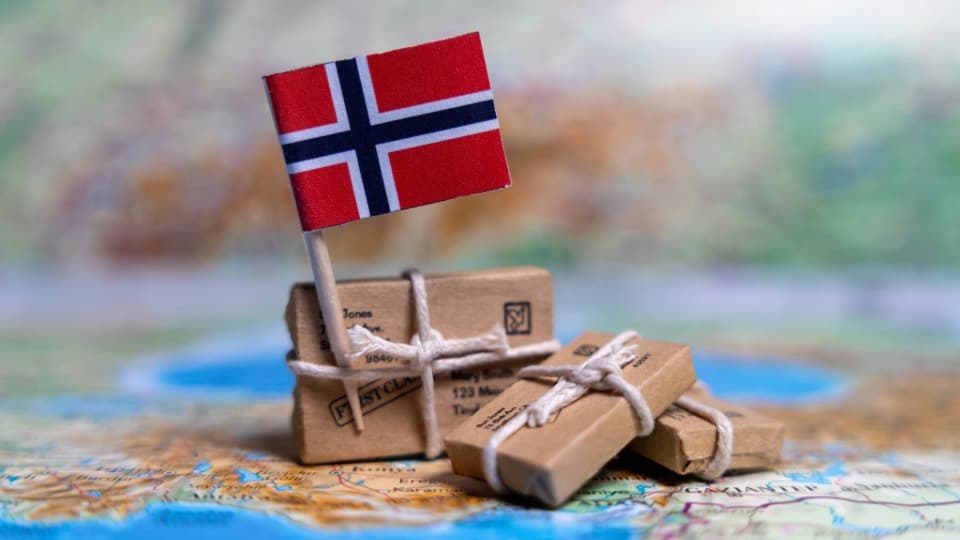
Visas and customs – why your status is crucial for importing your household goods to Norway
The following applies to the duty-free and tax-free import of removal goods to Norway:
- You must have lived abroad continuously for at least one year,
- owned and used the items abroad and continue to use them for personal purposes,
- import the household goods within one year of moving,
- and submit a correct declaration using form RD-0030 and an inventory list.
Your residence status must be appropriate:
- Those who are moving permanently (work, study, family, EU/EEA registration) can make use of this regime.
- A pure visitor or tourist setup is not suitable for container moves.
Detailed information on the customs regulations applicable to Norway can be found here.
Legal notice
This page provides concise, practical guidance on visas and residence permits for moving to Norway. It is not a substitute for individual legal advice.
Only the latest information from the following sources is binding:
- Utlendingsdirektoratet (UDI – Norwegian Directorate of Immigration)
- Norwegian diplomatic missions (information on Schengen visas and residence permits)
- Norwegian Customs – toll.no for all questions relating to customs and removal goods.
FAQ – The most frequently asked questions about visas for moving to Norway
Do I have to pay customs duty on my belongings when moving to Norway?+
No, private household goods (relocation goods) are generally exempt from customs duties and taxes, provided that you have lived abroad for at least one year and the items were already in your possession and use. However, you must submit form RD-0030 to Norwegian Customs.
What are the duty-free allowances for alcohol and tobacco when moving to Norway?+
The standard allowances of Norwegian customs also apply to removals. For example, each person (over the age of 18 or 20) may import 1 liter of spirits, 1.5 liters of wine, and 2 liters of beer duty-free. Quantities exceeding these limits must be declared and customs duties paid.
As a German citizen, do I need a visa for Norway?+
No, as an EU/EEA citizen, you do not need a visa to enter and stay for up to 90 days. If you plan to stay longer, you only need to register with the Norwegian police (registration certificate) if you are working, studying, or have sufficient funds.
How do I register my car in Norway?+
Importing a car is a complex process. You must register the vehicle with customs and pay import sales tax as well as a one-time fee (Engangsavgift) based on weight and emissions. The vehicle must be re-registered with Norwegian license plates within 12 months.
What is the Norwegian personal identification number (Fødselsnummer)?+
The Fødselsnummer is an 11-digit identification number for anyone who has been living in Norway for more than six months. It is essential for opening a bank account, signing contracts, and communicating with authorities.
Can I take food and potatoes with me to Norway?+
You may bring a total of up to 10 kg of meat, cheese, and food from EU countries.
Important: The import of potatoes into Norway is strictly prohibited for private individuals in order to prevent plant diseases.
What happens to new goods in the moving truck?+
Items that are still in their original packaging or were purchased shortly before the move are not considered used moving goods. These are subject to Norwegian import sales tax (MVA), which is currently 25%.
Why DACHSER & KOLB is the right choice

Personalized advice
Detailed needs analysis for customized relocation solutions.

Relocation planning from A to Z
Complete relocation planning: from packing to unloading, all from a single source.

Reliable network
Global network for safe, seamless transport.
We are here for you
Were we unable to answer your questions about visas?
Then please do not hesitate to contact us.

Discover our moving guides—your guide to a smooth move!
You will find valuable tips and answers to your questions in our extensive collection of moving guides. This will ensure that you are well prepared! If anything remains unclear, we are always happy to assist you.
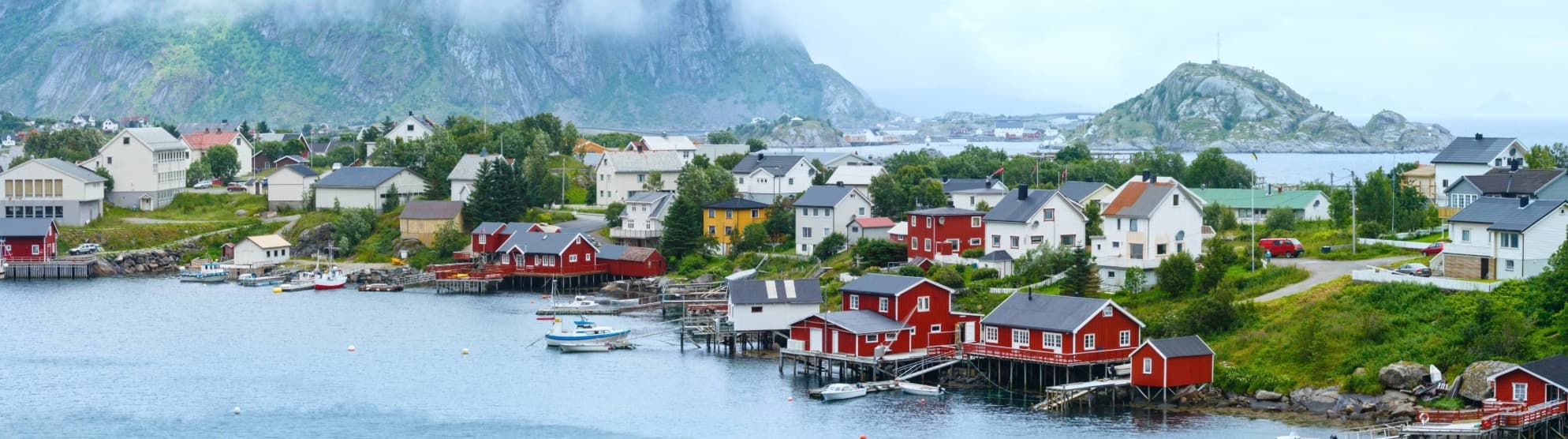
Moving animals to Norway with a plan – DACHSER & KOLB
Find out about the requirements, rules, and safe transport of your pet when moving to Norway. All the important details about entry, health regulations, and more.
Norway
Discover Norway – a country that captivates visitors with its deep fjords, clear lakes, rugged coastline, and spectacular mountain landscapes. Between Oslo, Bergen, and the Lofoten Islands, nature, tranquility, and a high quality of life come together to create an expat destination that uniquely combines freedom, wide-open spaces, and modern living.
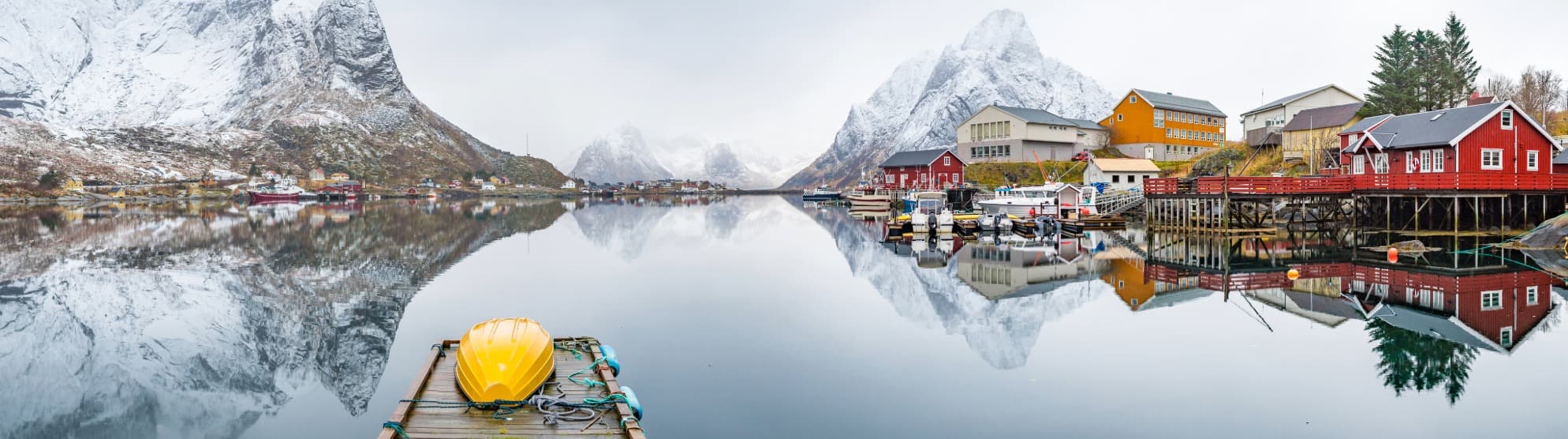
Customs regulations when moving to Norway
Moving to Norway: Import your belongings duty-free. Save time and money. Our guide explains the forms, deadlines, and important rules for your new start.