
Moving from Thailand to Germany: How to get through customs without any stress
Learn everything you need to know about customs forms (0350, 0060), relocation goods, and the perfect inventory list for your move from the Far East.
Price Calculator
Don't know your moving volume? In the next step, simply describe your move in your own words — our AI estimates the volume for you.
- Route
- Size
- Contact
Where is your move going?
Enter the loading and unloading address — we calculate the route for your move.
Don't know your moving volume? In the next step, simply describe your move in your own words — our AI estimates the volume for you.
- Truck
- Container
- Plane
Non-binding and free — a survey only comes if you want one.
Travel safely to the United States of America. Stress-free – and CBP-compliant, of course.
As Thailand is not a member of the EU, certain requirements must be met in order to import household goods duty-free.
The most important information at a glance:
✓ Status: Thailand is a non-EU third country.
✓ Key documents: Form 0350 (3 copies) & detailed inventory list (3 copies).
✓ Proof of residence: You must have lived in Thailand for at least 12 months.
✓ Length of ownership: Items must have been in your possession and use in Thailand for at least 6 months.
✓ Vehicles: Additional Form 0060 required.
✓ Special rule for Thailand: Export license required for Buddha statues and antiques.
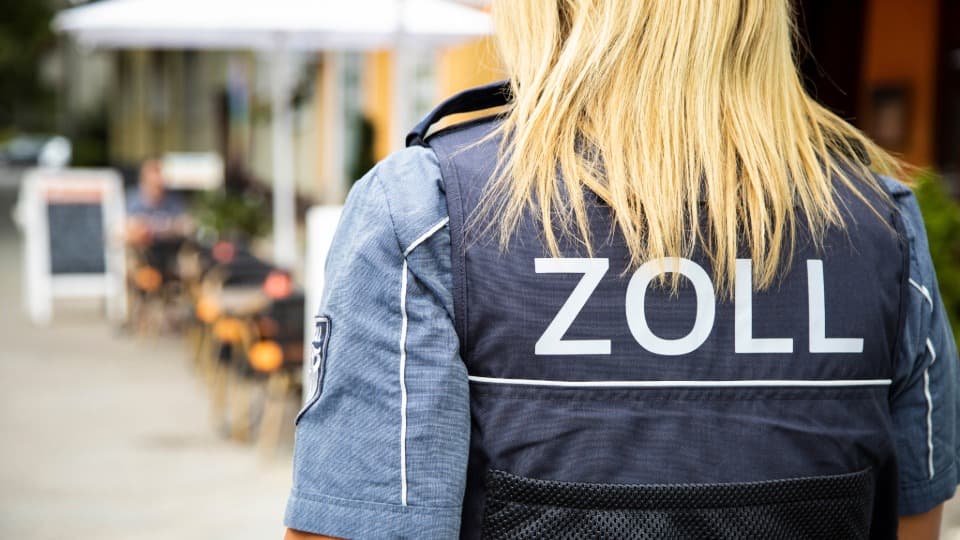
Duty exemption for removal goods
If you move your usual place of residence from Thailand (third country) to the EU, personal belongings can generally be imported duty-free—but only if the rules are followed. This is based on EU rules on customs exemption when changing residence.
If you want to stay or work/study in Germany for more than 90 days, third-country nationals are generally required to obtain a visa (exceptions apply depending on nationality). Clarify this before shipping, otherwise your removal goods will be stuck at the wrong time.
Requirements for customs exemption

1. Change of residence
As a natural person, you must permanently relocate your center of life to Germany.

2. 12-month import period
The relocation of your belongings must take place promptly after the change of residence.

3. Previous ownership and use (6-month rule)
The items to be moved must have been in your possession for at least 6 months prior to the move and must be intended for personal use.

4. Retention period (blocking period)
You intend to keep the items for at least 12 more months and not to lend, rent, or sell them.

5. Time frame
The goods must be imported within 12 months of your arrival.

Household goods can be imported duty-free.
Step by step: How to apply for customs exemption
- 1.
Collecting documents in Thailand (preparation phase)
- Before the moving truck is loaded, you must prove that you have lived in Thailand for at least 12 months.
- Important: Obtain an official confirmation of deregistration (if possible) or proof of termination of your apartment in Thailand.
- 2.
Create the bilingual inventory list
- This is the most important document for customs officials at the border.
- List each package individually (example: Item 1: 10 boxes of clothes).
- The list must be written in German and English.
- Print out three copies of the list. These will be given to the driver on moving day.
- 3.
- 4.
Handover on moving day
When the moving company arrives, hand over the complete set of documents to the driver. Customs will not accept copies or scans for primary clearance at the border.
- 5.
Clearance at the border & registration in Germany
- At the border: The driver presents the documents at the border customs office (e.g., Calais or Coppet/Basel). The officials check the plausibility and stamp the forms.
- After arrival: Register with the residents' registration office in Germany within 14 days. You may need to submit the registration certificate to customs if it was not available on the day of the move.

Duty-free import
- Household goods: Furniture, carpets, household appliances, lamps, pictures, and decorative items.
- Textiles: Clothing, bed linen, towels, and curtains.
- Electronics: Computers, televisions, kitchen appliances, and DIY equipment.
- Vehicles: Private cars, motorcycles, bicycles, trailers, and even sports aircraft or watercraft (provided you have owned them for at least six months).
- Pets: Your personal pets and mounts (horses).
- Professional equipment: Portable instruments or devices you need to perform your trade or profession (e.g., tools, medical instruments).

Excluded from duty-free importation
- Medications: Only for personal use (max. 3-month supply). Be careful with Thai preparations that may fall under the Narcotics Act.
- Buddha statues & antiques: The export of Buddha images is strictly regulated in Thailand. You need a permit from the Fine Arts Department, even for modern replicas.
- Alcohol & tobacco: These are not considered relocation goods. Quantities exceeding the travel allowance are subject to high taxes and do not belong in the container.
- Vehicles (cars/motorcycles): Must have been registered in your name in Thailand for at least 6 months. In Germany, a full inspection (TÜV) is mandatory.
- Pets: Thailand is considered a “non-listed third country.” A rabies titer test (blood test) is mandatory, followed by a 3-month waiting period before entry.
- Cash: Amounts of €10,000 or more (or the equivalent in THB) must be declared in writing upon entry into the EU.
Checklist for your move to Germany
✓ Form 0350: The official application for customs exemption (pages 1–3).
✓ Inventory list: A complete, numbered list of your belongings in German and English.
✓ Proof: Copies of your passport, including Thai visa pages and exit stamp, proof of change of residence, and rental/employment contract from Germany.
✓ Residence: You must provide proof that you have lived in Thailand for at least 12 months.
✓ Ownership: All removal goods must have been in your possession and used by you for at least 6 months (no new goods in their original packaging!).
✓ Special rule for Thailand: An export license may be required for Buddha statues/antiques.

Documents required for moving to Germany
To ensure that customs clearance runs smoothly, we require the following documents:
✓ Form 0350 (application for exemption from import duties)
✓ Form 0060 (if a vehicle/car/motorcycle is being transported)
✓ Detailed inventory list (in German and English, specifying the packages)
✓ Passport copy (including Thai visa pages and exit stamp)
✓ Proof of change of residence (e.g., termination of employment contract in Thailand, deregistration at embassy)
✓ German registration confirmation (from new place of residence in Germany)
✓ Power of attorney (if DACHSER & KOLB is handling customs clearance for you)
Your advantages when moving to Germany with DACHSER & KOLB

Competent customs clearance
We take care of all the organization and formalities with the relevant customs authorities.

Individual advice
We take the time to listen to your wishes and requirements and draw up a detailed relocation plan.
Transparent planning
Our free viewing and moving cost calculator give you a clear overview of the costs.

Experienced specialists
From planning to execution, we rely on qualified employees who will ensure that your move is stress-free.
How DACHSER & KOLB supports you when entering the EU
DACHSER & KOLB is your reliable partner for a stress-free move to Germany/the EU. We take care of all customs clearance for you and ensure that all formalities are handled correctly. Our services include:
- 1.
Provision and explanation of forms
Assistance in completing customs-specific documents.
- 2.
Document check before dispatch
Checking whether passport copies, inventory lists, and forms are complete and plausible.
- 3.
Risk check for “prohibited/risky goods”
Advice on which items are not allowed in the container and what alternatives are available.
- 4.
Handling of special cases
Vehicle imports, pets (separate processes), high-value art, inheritances, or professional work equipment.
Advantages of early customs clearance and information

Avoiding delays
- Early clarification of visa, status, and documents prevents downtime.
Cost control
- Avoidance of entry fees
- No demurrage charges
Smooth operation
- Synchronized planning creates a clean end-to-end process.
- Clear inventory lists and complete forms keep queries to a minimum.
Avoiding stress
- Once the customs issue has been “ticked off,” you can focus on starting your job, finding accommodation, and settling in.
Better logistics planning
- Binding time slots for pickup, transport, and delivery to Germany are only realistic with a clear customs strategy.
- Fast border clearance
Frequently asked questions (FAQ) – Customs when moving from Thailand to Germany
Do I have to pay customs duty on my belongings because Thailand is not part of the EU?+
Formally: yes, customs clearance is required. If the requirements for household goods are met, importation is usually duty-free.
Can I have parts of my belongings delivered later?+
Yes. Partial shipments are generally possible—the decisive factors are the time frame for the change of residence and consistent initial registration/documentation logic.
Can I sell or give away my belongings immediately after importing them?+
Generally no: A 12-month restriction period applies to goods imported duty-free as part of a household removal.
What about new items?+
New goods are a sensitive issue when it comes to customs. If it looks like “purchases for the move,” this may trigger duties. Recommendation: document everything transparently and have it critically reviewed.
Which goods are most often problematic?+
Medicines without proof of origin, plants/foodstuffs without the required documentation, weapons/ammunition, and new goods with unclear declarations.
Contact us for a free consultation!
With customs clearance for your move from Thailand to the EU, DACHSER & KOLB ensures that your move is efficient, safe, and stress-free. Contact us for a no-obligation consultation!
We are here for you
We couldn't answer your questions?
Then don't hesitate to contact us.