

Emigrate to South Africa
Visa, safety, costs, and climate in South Africa: a reality check
Price Calculator
Price Calculator
A few steps to your personal price
Step 1 of 3
Don't know your moving volume? In the next step, simply describe your move in your own words — our AI estimates the volume for you.
- Route
- Size
- Contact
Where is your move going?
Enter the loading and unloading address — we calculate the route for your move.
Don't know your moving volume? In the next step, simply describe your move in your own words — our AI estimates the volume for you.
- Truck
- Container
- Plane
Non-binding and free — a survey only comes if you want one.
Emigrating to South Africa: The most important answers first
✓ Visa required for extended stays: Entry for short stays is possible without a visa; a visa is required for extended stays.
✓ Economy: Very promising, but living conditions vary significantly depending on the region and neighborhood.
✓ Security situation is challenging: A key planning factor, as South Africa has a high crime rate.
✓ Two-tier healthcare system: Both public and private healthcare are available; therefore, good health insurance is important.
✓ Climate varies by region: South Africa is generally rather dry, with summer and winter rains in certain parts of the country.
✓ Language skills: English is important in daily life and at work; at the same time, South Africa is officially multilingual.
✓ Special features: Penguins, coastlines, and diversity—South Africa combines major cities, wilderness, and coastal landscapes.
✓ Moving with pets: Thorough preparation required
Make moving easy with DACHSER & KOLB. Use the moving cost calculator. Get a quote and consultation. Book a tour. Move.
Facts about South Africa

Capital Citys
Cape Town, Prtoria and Bloemfontein

Population
59.89 million

Surface Area
758,072.85 mi² or 1,220,000 km²
Continent
Africa

Official Language
English, Afrikaans

Currency
Rand (ZAR)

What are the customs, visa, and entry requirements for South Africa?
German citizens can generally enter South Africa for tourism, visits, or business trips without a prior visa. However, this is not sufficient for permanent relocation: Anyone wishing to stay longer must obtain the appropriate visa before entering the country. In addition, there are clear requirements regarding travel documents, length of stay, and importation.
Documents required for entry:
- Passport: Yes
- Temporary passport: Yes
- Identity card: No
- Temporary identity card: No
- Child passport: Yes. Entry is only possible with a child passport that has not been extended or updated.
Tip for emigrants: In South Africa, the legal basis for entry must be established first. Those who clarify visa requirements, passport validity, and residency status early on will avoid delays, additional costs, and, in the worst case, a multi-year entry ban.
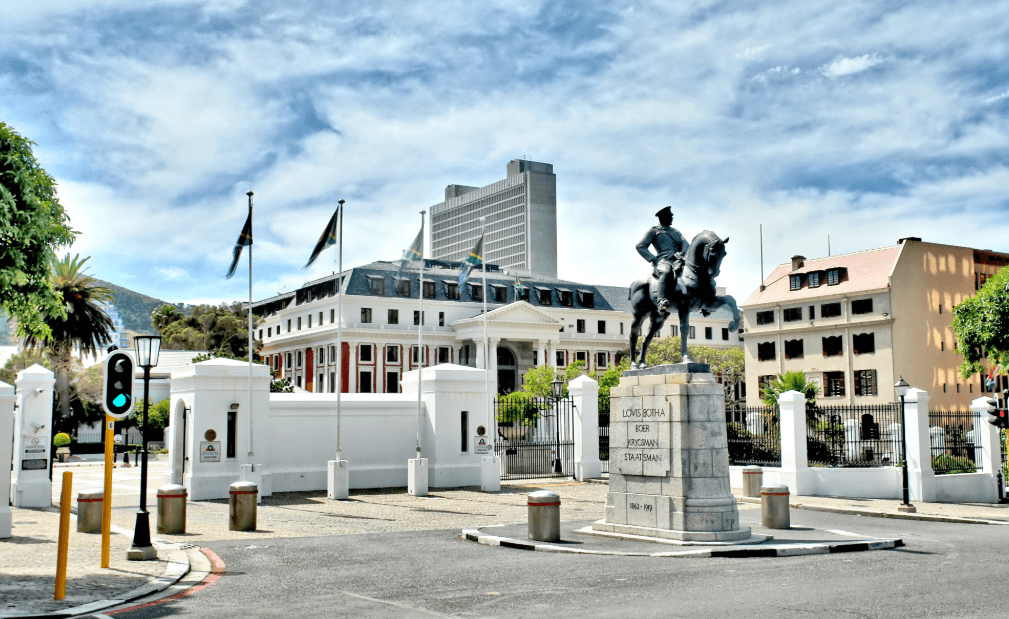
The Economy in South Africa: What Opportunities are there for emigrants?
South Africa is Africa’s most industrialized economy and has key sectors such as mining, transportation, energy, manufacturing, tourism, and agriculture. Living conditions vary greatly depending on region, neighborhood, safety, and income.
Key facts at a glance:
- Robust growth, even by EU standards, averaging 3–4% GDP growth per year (2012–2025).
- Income distribution: Gini coefficient = 63 (0 = perfect equality; 100 = maximum inequality), making it one of the most unequal countries in the world.
- Key sectors: Mining, manufacturing, tourism
- Solid infrastructure in many urban centers
- The job market remains challenging
- High inequality is palpable in everyday life
- Quality of life heavily dependent on neighborhood
- Prime locations often significantly more expensive
Tip for expats: South Africa offers opportunities, but no guaranteed business case. Anyone wishing to move to South Africa should not only calculate salary and rent, but also factor in security costs, mobility, school commutes, and a solid financial cushion.
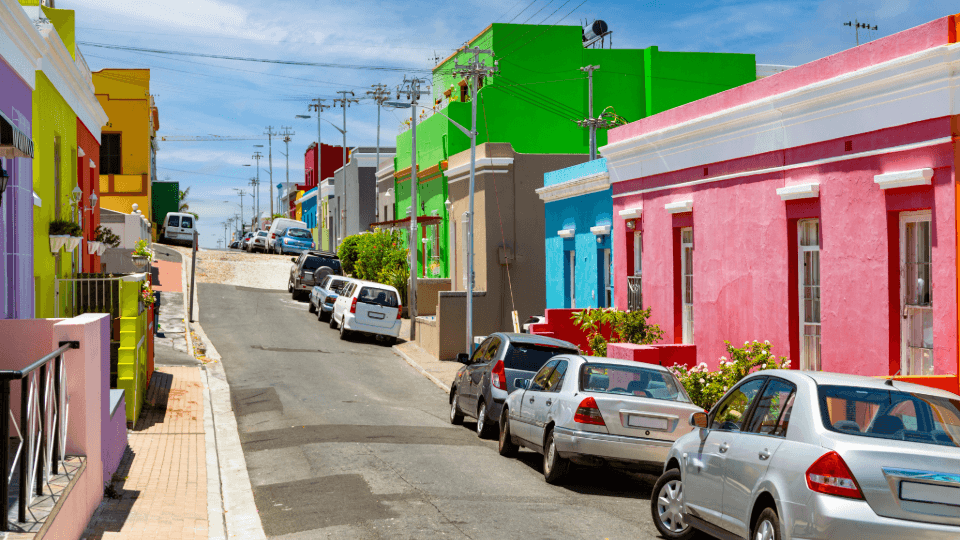
Safety in South Africa: What do expats need to know?
The security situation in South Africa is not a minor issue, but a key location factor. The crime rate is very high, with robberies, thefts, car break-ins, carjackings, and muggings being particularly prevalent in central business districts (CBDs), informal settlements (townships), and along certain major thoroughfares. Visiting certain CBDs is strongly discouraged.
What expats should know:
- Crime rate very high
- CBDs and townships particularly sensitive
- Car break-ins and carjackings possible
- Nighttime driving is riskier
- Choose your residential area strategically
- Safety routines in daily life are important
Tip for expats: In South Africa, location has a massive impact on quality of life. A good residential area, clear daily routines, safe mobility, and a realistic awareness of safety are essential parts of your basic planning.

What is the healthcare system like in South Africa?
The healthcare system in South Africa is comprehensive, yet it is heavily influenced by access, region, and financial means. The government describes a structured national system, while in practice, households choose between public and private options based on proximity, affordability, and perceived quality. Additionally, for expats, vaccination status, regional malaria risks, and reliable health insurance coverage are crucial.
At a glance:
- Public and private healthcare available
- Access often depends on budget and location
- International health insurance is important
- Proof of yellow fever vaccination may be required
- Be aware of regional malaria risk
- Check standard vaccinations before departure
Tip for expats: In South Africa, healthcare should not be organized only once you arrive. Those who secure insurance, vaccination status, medications, and the medical setup at their destination in advance significantly reduce operational risks.
Are you planning to move to South Africa?
With structured preparation, you can avoid financial surprises. Our moving cost calculator provides clarity — it's simple, convenient, and takes just a few steps.
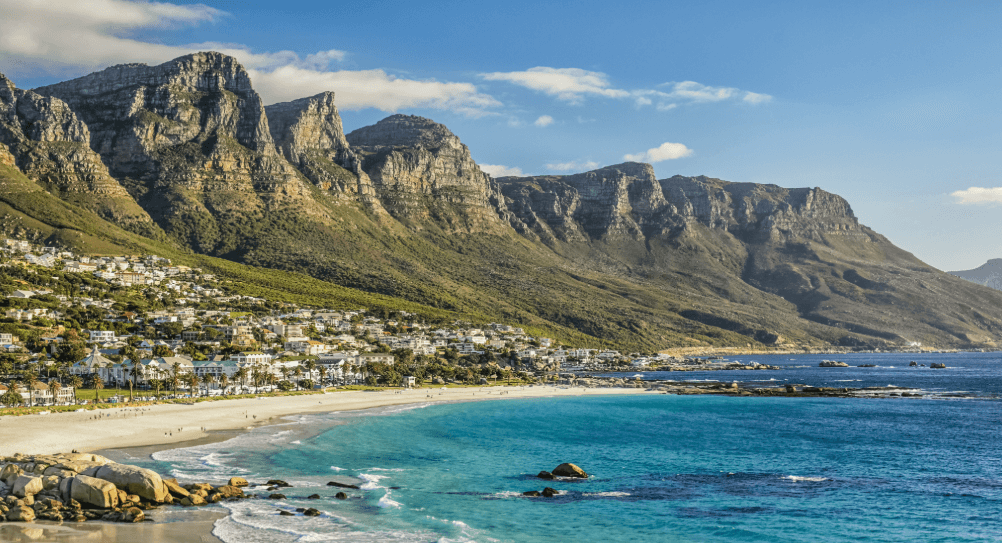
What is the climate like in South Africa, and are there significant differences?
South Africa does not have a uniform climate. The country is relatively dry, moderately warm, and characterized by its location between two oceans and the elevation of the inland plateau. The Western Cape experiences mostly winter rainfall, while large parts of the rest of the country tend to have summer rainfall. The east and west coasts also differ significantly due to the warm Agulhas Current and the cold Benguela Current.
What the climate means for your daily life:
- Western Cape with winter rains
- Many regions with summer rains
- Mild winters on the coast
- Highlands significantly cooler in winter
- East and West coasts climatically different
- Seasons reversed compared to Europe
Tip for expats: South Africa should not be viewed as a single market in terms of climate. Cape Town, Johannesburg, Durban, or the Lowveld offer completely different conditions for living, working, and daily life.
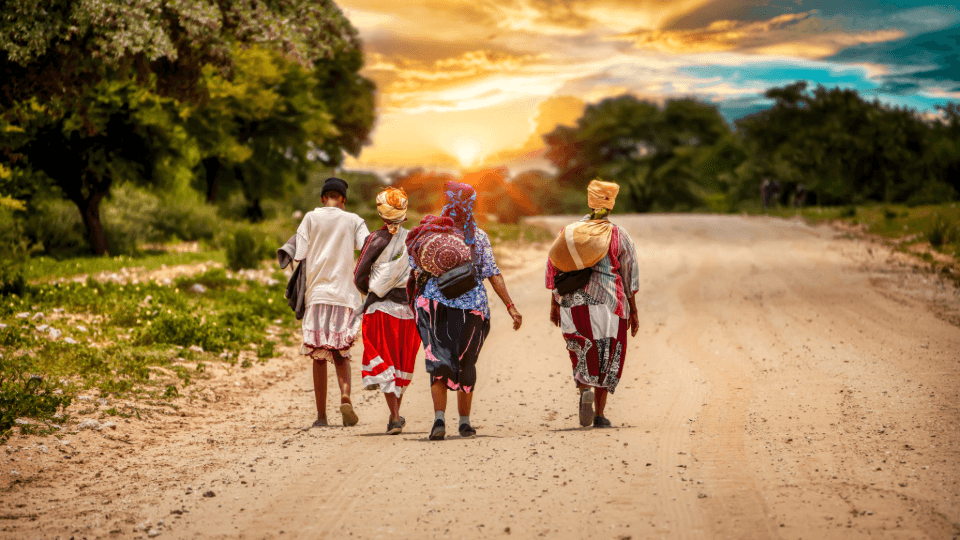
What shapes language, culture, and daily life in South Africa?
South Africa is extremely diverse in terms of language and culture. The government lists English, isiZulu, isiXhosa, Afrikaans, and numerous other official languages. At the same time, English is the most important tool for orientation and connectivity in urban and business life. Added to this are significant regional differences, stark social contrasts, and a highly heterogeneous daily life across major cities, suburbs, and rural areas.
What really helps in everyday life:
- English is very important in everyday life
- Afrikaans, isiZulu, and isiXhosa are widely spoken
- Cultural diversity is very high
- Regional differences are clearly noticeable
- Social contrasts shape daily life
- Networks make settling in easier
Tip for expats: Good English is a real productivity factor in South Africa. Those who openly engage with different communities and respect local customs will advance much faster socially and professionally.
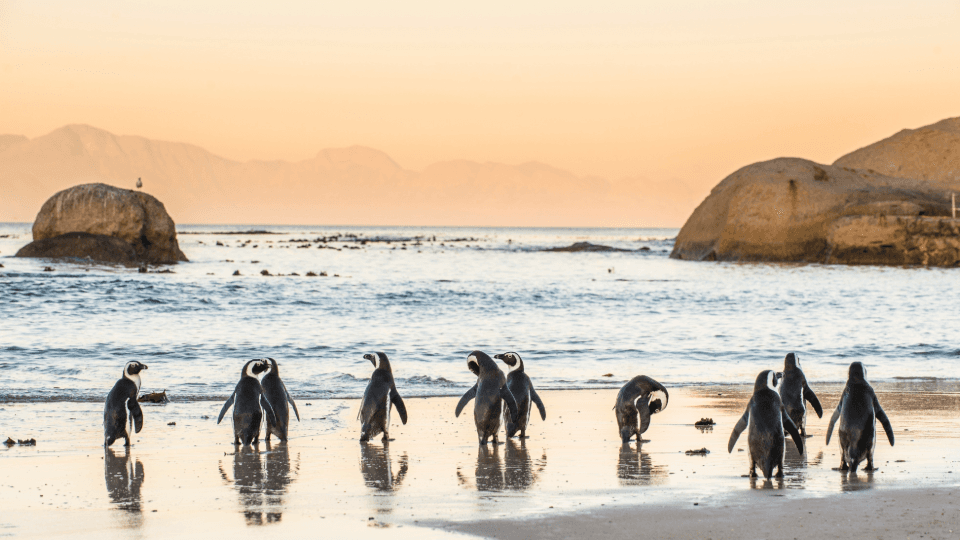
What makes South Africa unique and why do penguins play a part in that?
South Africa stands out not only for its safaris, wine regions, and coastal landscapes, but also for a surprising feature: African penguins. The Boulders Penguin Colony near Simon’s Town is home to a unique, endangered land-based colony of these animals and is one of the country’s most famous natural attractions. It is precisely this mix of penguins on the beach, major cities, mountains, the Garden Route, and wilderness that makes South Africa such a distinctive destination for expats.
In detail:
- African penguins near Cape Town
- Boulders Beach as a unique feature
- Colony endangered and protected
- Two oceans shape the country
- Extreme landscape diversity
- Nature and city very close together
Tip for expats: South Africa scores points not only with the “Big Five,” but also with a rare range of landscapes. Anyone looking to combine nature, the coast, outdoor life, and international cities will find an exceptionally strong overall package here.

What should you bear in mind when moving to South Africa with animals?
Moving with pets to South Africa requires more advance planning than many people expect. In addition to transportation, veterinary documentation, deadlines, vaccinations, and animal welfare must all be carefully coordinated.
What you should keep in mind:
- Check vaccination status well in advance
- Prepare complete veterinary documentation
- Get the pet carrier used to the flight
- Coordinate entry and flight requirements, prepare import permit
- Minimize stress for the animal on moving day
- Actively support acclimatization at the new home
Tip for expats: When moving with pets, it’s not about improvisation, but timing. Starting early reduces stress, avoids paperwork errors, and ensures a much smoother process.

For whom is South Africa a suitable destination for emigration?
South Africa is particularly well-suited for people who want to combine nature, international exposure, and economic opportunities with realistic planning. The country is especially suitable for skilled professionals, entrepreneurs, expats with a stable income or employer-sponsored benefits, and anyone who can adapt well to regional differences, security requirements, and a high degree of cultural diversity.
Checklist before moving to South Africa:
✓ Check entry requirements and residency regulations for South Africa well in advance
✓ Secure health insurance, vaccination status, and medical care
✓ Choose a suitable place to live in South Africa with safety and daily life in mind
✓ Plan an emigration budget for South Africa, including a buffer
✓ Prepare thoroughly for the move to South Africa with household goods and documents
✓ Use English and be open to cultural diversity
Conclusion: South Africa captivates with spectacular nature, great cultural diversity, and a way of life that blends coast, cities, wilderness, and open spaces. The country is particularly well-suited for expats seeking internationality, an outdoor lifestyle, and powerful experiences, and who are strategically planning their fresh start.
FAQs for emigrating to South Africa
Do I need a visa to emigrate to South Africa?+
German citizens generally do not need a visa for short-term tourist, visit, or business trips. For work, study, emigration, or other extended stays, an appropriate visa is required prior to entry.
How long can I stay in South Africa without a visa?+
Upon entry, German citizens are generally issued a visitor’s visa valid for up to 90 days for their planned trip. Those who wish to stay longer must obtain the appropriate residence permit in advance.
Is South Africa safe for expats?+
South Africa is an attractive destination for expatriates, but the security situation is a key factor to consider. The country has a very high crime rate, which is why visiting certain city centers, among other places, is strongly discouraged.
What language is spoken in South Africa, and is English sufficient for everyday use?+
South Africa has eleven official languages. English is particularly important in everyday life and in professional settings, and for many immigrants, it is the key to settling into life there.
What is the healthcare system like in South Africa?+
South Africa has both public and private healthcare systems. According to government figures, there are high-quality facilities nationwide; however, care in rural areas is more basic, which is why it makes sense to secure adequate coverage before moving there.
Is there malaria in South Africa?+
Yes, the risk of malaria varies by region. There are areas with high seasonal risk, including parts of Mpumalanga and Limpopo, while the southern parts of the country are malaria-free.
Can I move to South Africa with my dog or cat?+
Yes, it is possible to move with pets, but you must obtain permission. Before moving abroad, you must obtain a veterinary import permit, and current health and documentation requirements must be met.
Are you interested in moving to South Africa or another destination country?
Then do not hesitate and contact us today.

Related topics

Relocation Service for Individuals
With our relocation service for private individuals, DACHSER & KOLB ensures a relaxed new start abroad and accompanies you throughout your private move from start to finish – personally, reliably, and worry-free.

Relocation Service for Expats
Support for international professionals during onboarding at the new destination. We assist your expats with home search, administrative procedures, and visa processes for a fully secure and smooth “soft landing”.

International Move
Have you been bitten by the travel bug and would like to emigrate? Then you have come to the right place and your belongings are in the best of hands. For many years there has been nothing we would rather do than organize international removals across continents. Whether by ship, by plane or over land.