
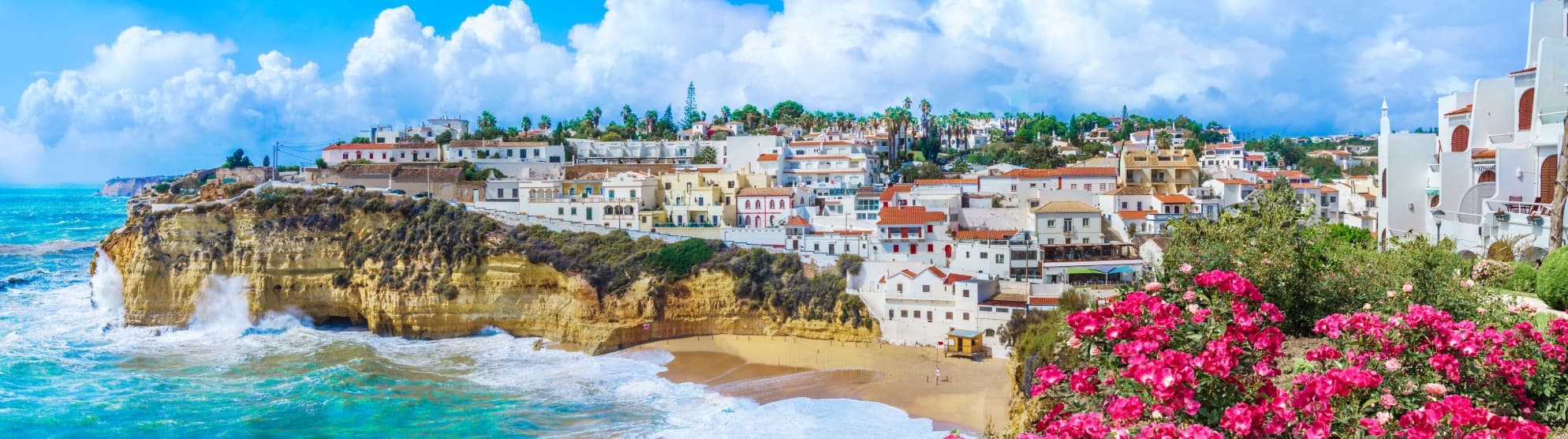
Emigrating to Portugal
Visa, safety, costs, and climate in Portugal: a reality check
Price Calculator
Price Calculator
A few steps to your personal price
Step 1 of 3
Don't know your moving volume? In the next step, simply describe your move in your own words — our AI estimates the volume for you.
- Route
- Size
- Contact
Where is your move going?
Enter the loading and unloading address — we calculate the route for your move.
Don't know your moving volume? In the next step, simply describe your move in your own words — our AI estimates the volume for you.
- Truck
- Container
- Plane
Non-binding and free — a survey only comes if you want one.
Emigrating to Portugal: The most important answers first
✓ Visa-free entry: Entry is possible without a visa, but registration is required for longer stays.
✓ A broad and international economy: Opportunities exist especially in IT, healthcare, logistics, and tourism.
✓ A generally stable security situation: Petty crime exists in hotspots, and natural hazards should be taken seriously.
✓ A publicly organized healthcare system: Clarify SNS access and insurance status early on.
✓ A mild and sunny climate: Atlantic in the north, warmer and drier in the south.
✓ Language skills: Everyday life is partly English-friendly, but Portuguese is clearly an advantage.
✓ Special feature: Atlantic coastline, fado, azulejos, and high quality of life within the EU.
✓ Moving with pets: Usually well manageable within the EU with a pet passport and vaccination.
Relocating made easy with DACHSER & KOLB. Use our moving cost calculator. Get a quote and consultation. Book a tour. Move.
Facts about Portugal

Capital City
Lisbon

Population
10.74 million

Surface Area
57,260.60 mi² or 92,152 km²

Continent
Europe

Official Language
Portuguese

Currency
Euro (EUR)

What are the customs, visa, and entry requirements for Portugal?
For German citizens, a passport or ID card is sufficient for entry, and no visa is required. However, EU citizens who stay longer than three months must apply for a registration certificate at the competent local authority within 30 days after the end of those first three months. Violations may be punished with fines ranging from 400 to 1,500 euros. In addition, carrying a passport is recommended.
Documents required for entry:
- Passport: Yes (recommended)
- Temporary passport: Yes
- National ID card: Yes
- Temporary national ID card: Yes
- Child passport: Yes
Tip for expats: Portugal looks formally easy for EU citizens, which is exactly why registration and required documents are often left too late. First set up the legal framework properly, then coordinate housing, job start, and the move.
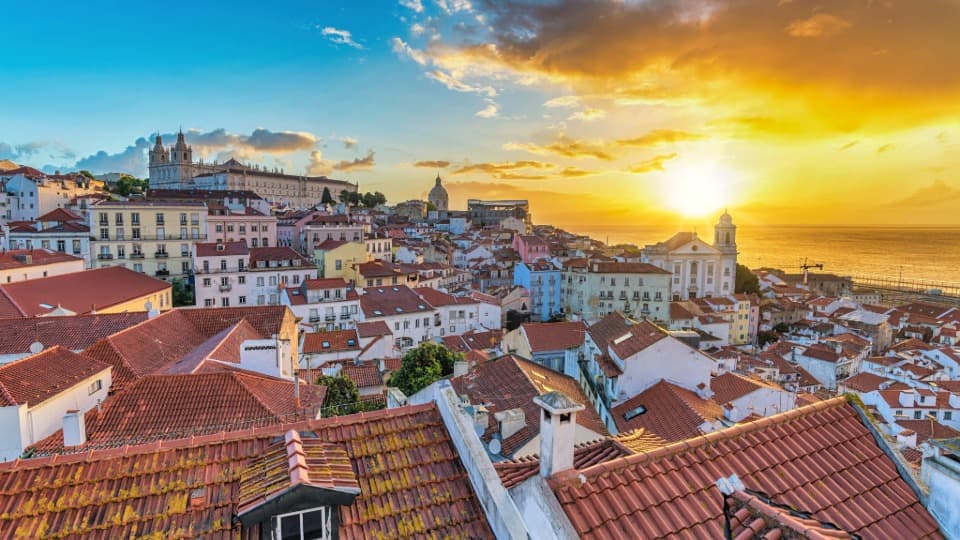
Economy in Portugal: What opportunities are there for expats?
Portugal remains economically attractive, but not automatically cheap. Further economic growth is also expected in the coming years. Opportunities exist, among others, in healthcare, logistics, pharmaceuticals, construction, IT, and tourism. At the same time, rental data for Lisbon shows that housing costs in major urban centers are higher and should be factored in from the outset.
Key facts at a glance:
- Robust growth, including compared with the EU, with average GDP growth of 1.2% per year (1996–2025).
- Income distribution: Gini coefficient = 33.9 (0 = perfect equality; 100 = maximum inequality)
- Opportunities in IT and digital roles, with logistics and transport also relevant
- Demand for skilled workers in construction, healthcare, and care professions
- Tourism remains a strong sector
- Calculate rents in Lisbon and Porto realistically
Tip for expats: Check the location and the overall setup closely in advance. Anyone who factors in salary, housing costs, insurance, and taxes already at the location-selection stage and calculates carefully will get started more easily and with less stress.

Safety in Portugal: What do expats need to know?
Portugal is generally a safe emigration destination, but it is not free of risks. Petty crime is a particular concern in heavily touristed districts and regions, especially in Lisbon and Porto. There are also warnings about car break-ins in hotspots and beach-adjacent areas. In addition, there are natural risks such as strong ocean currents, summer fires, and on the islands also storms, landslides, and seismic activity.
What expats should know:
- Petty crime in tourist centers
- Pickpocketing is relevant in Lisbon and Porto
- Car break-ins in hotspots are not uncommon
- Take Atlantic currents along the coast seriously
- Be aware of summer bush and forest fires
- Madeira and the Azores come with additional natural risks
Tip for expats: Security is rarely a major issue in Portugal. Standard precautions, situational awareness, and respectful handling of natural hazards are usually enough to keep everyday life reliably under control.

What is the healthcare system like in Portugal?
Portugal has a public healthcare system called SNS. Foreign nationals who are legally resident can obtain an SNS user number. For actual cost coverage under SNS, the system generally requires an identity document, NIF (Portuguese tax identification number), address in Portugal, and valid residence status. At the same time, private providers continue to play an important practical role.
At a glance:
- SNS as the public healthcare system
- An SNS number (Portuguese healthcare number) is possible for lawful residents
- NIF (Portuguese tax identification number) and a Portuguese address are important
- Residence permit or lawful status is relevant
- Public and private healthcare exist side by side
- Clarify coverage properly before departure
Tip for expats: In Portugal, healthcare is above all a structural issue. Anyone who clarifies NIF, registration, and medical access logic early will save time and uncertainty later.
Are you planning to move to Portugal?
With structured preparation, you can avoid financial surprises. Our moving cost calculator provides clarity — it's simple, convenient, and takes just a few steps.
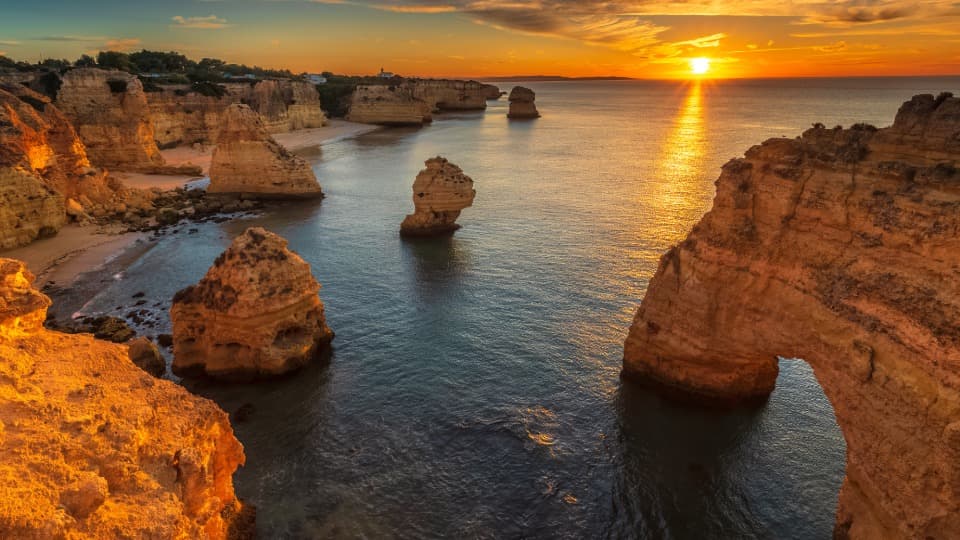
Temperate to subtropical – What is the climate like in Portugal?
Portugal offers much more climatic variety than many people expect at first glance. Mainland Portugal has an Atlantic climate, the Azores have a temperate climate, and Madeira has a subtropical climate. The north tends to be wetter and cooler, while the south is warmer and drier. On top of that come storms and heavy rain in autumn and winter, as well as elevated fire risks in summer.
What the climate means for your daily life:
- The north is cooler and wetter
- The south is warmer and drier
- The Atlantic coast has in places strong currents
- Madeira is shaped by a subtropical climate
- The Azores are more changeable and more temperate
- Summer heat and fires are regionally relevant
Tip for expats: Climate in Portugal is a location issue. Anyone who treats northern Portugal, Lisbon, the Algarve, Madeira, and the Azores as if they were the same is planning against the reality of daily life.

What shapes language, culture, and daily life in Portugal?
Portuguese is the key everyday language. English works well in international professional contexts, but outside those settings Portuguese clearly dominates. Culturally, the country is strongly shaped by the Atlantic, seafaring, and culinary traditions. Musically, fado stands at the center as a recognized national symbol, while azulejos visibly shape the cultural heritage and the cuisine is heavily influenced by the sea.
What really helps in everyday life:
- Portuguese is the key to everyday life
- English helps mainly in certain sectors
- Fado clearly belongs to the country’s culture
- Azulejos shape the cityscape in many places
- The cuisine is strongly influenced by the sea
- Integration works much faster with Portuguese
Tip for expats: Language helps, culture opens doors, and daily life works much more smoothly when you do not rely only on English. Even solid basic Portuguese directly improves everyday life, trust, and speed.

What makes Portugal special?
Portugal stands out through a rare combination of EU comfort, Atlantic coastline, culture, and proximity. The country combines historic cities, beaches, island worlds, fado, azulejos, and a strongly maritime identity with the structural advantages of EU, eurozone, and Schengen membership. That combination is exactly what makes Portugal such a strong emigration destination.
In detail:
- The Atlantic and coastal life
- Lisbon, Porto, and the Algarve as strong poles
- Madeira and the Azores as island options
- Fado and azulejos as cultural anchors
- EU and eurozone membership as a location advantage
- High diversity within short distances
Tip for expats: Portugal is especially suitable for people who want European stability without giving up climate, the sea, and cultural distinctiveness.

What should you bear in mind when moving to Portugal with animals?
A move with pets to Portugal is comparatively easy to plan within the EU. In addition to transport, veterinary documents, deadlines, vaccinations, and animal welfare need to be coordinated properly. Relevant points are the microchip, a valid rabies vaccination, and the EU pet passport. When entering from non-EU countries, an EU health certificate and additional DGAV requirements also apply.
What you should keep in mind:
- Check your pet’s vaccination status early, as a valid rabies vaccination is required
- Prepare all veterinary documents completely in advance, with the EU pet passport being required
- Microchip or clear identification
- Train your pet to use the travel crate before the flight
- Coordinate entry requirements and airline regulations
- Minimize stress for your pet on moving day
- Actively support your pet’s adjustment to the new home
Tip for expats: Prepare veterinary documents early. Moving pets to Portugal only becomes complicated when vaccination status and paperwork are checked too late.

For whom is Portugal a suitable destination for emigration?
Portugal is especially well suited to EU citizens, skilled professionals, self-employed people, remote-friendly profiles, and people who want to combine a milder climate with European legal certainty. It is less suitable for anyone heading into the major centers without a financial buffer, without willingness to learn the language, and without a realistic housing strategy.
Checklist before emigrating to Portugal:
✓ Check entry requirements and residence regulations for Portugal
✓ Secure health insurance and medical care coverage in Portugal
✓ Choose the right place to live in Portugal and arrange your initial accommodation
✓ Plan your emigration budget for Portugal, including a financial buffer
✓ Prepare your move to Portugal carefully, including household goods and documents
✓ Use English and settle into everyday life faster with Portuguese
Conclusion: Portugal is a strong emigration destination for anyone who wants to make a comparatively straightforward fresh start within the EU. Above all, the combination of mild climate, good location, high quality of life, international environment, and a stable European framework makes the country attractive.
FAQs for emigrating to Portugal
Do I need a visa for Portugal?+
No. German citizens can enter Portugal with a valid passport or identity card. For stays of more than three months, however, EU citizens must register their right of residence.
What do I need to pay particular attention to when emigrating to Portugal?+
Anyone planning to emigrate to Portugal should not only plan entry, but above all settlement. Key points are registration after three months, the NIF (Portuguese tax identification number), where relevant the NISS (Portuguese social security number), health insurance or access to the public SNS healthcare system, location choice, and a realistic budget for rent and daily life.
How important are NIF and NISS in Portugal?+
The NIF (Portuguese tax number) is central to many practical matters in Portugal, including tax-related issues and numerous everyday processes. The NISS (Portuguese social security number) is relevant for social security. If you start as an employee, your employer can also apply for the NISS.
Is Portugal a good country to work in?+
Portugal is economically interesting, but not equally attractive in every sector. Opportunities exist among others in healthcare, IT, logistics, pharmaceuticals, construction, tourism, and in certain international and English-speaking functions, such as shared services or customer service.
How high is the cost of living in Portugal?+
Portugal is no longer automatically a cheap emigration destination. Rents in Lisbon in particular can be high. EURES cites long-term rents in Lisbon at around 850 to 1,700 euros for a T1 apartment and 1,100 to 3,500 euros for a T2 apartment.
How does the healthcare system work in Portugal?+
Portugal has a public healthcare system called SNS. Foreign nationals who are legally resident can obtain an SNS user number. For the SNS to cover costs, the system generally requires an identity document, NIF (Portuguese tax number), Portuguese address, and valid residence status to be recorded.
Can I emigrate to Portugal with a dog or cat?+
Yes. Within the EU, moving with a dog, cat, or ferret is easy to plan when a microchip, valid rabies vaccination, and EU pet passport are in place. When entering from non-EU countries, additional veterinary requirements apply.
Are you interested in moving to Portugal or another destination country?
Then do not hesitate and contact us today.

Related topics

Relocation Service for Individuals
With our relocation service for private individuals, DACHSER & KOLB ensures a relaxed new start abroad and accompanies you throughout your private move from start to finish – personally, reliably, and worry-free.

Relocation Service for Expats
Support for international professionals during onboarding at the new destination. We assist your expats with home search, administrative procedures, and visa processes for a fully secure and smooth “soft landing”.

International Move
Have you been bitten by the travel bug and would like to emigrate? Then you have come to the right place and your belongings are in the best of hands. For many years there has been nothing we would rather do than organize international removals across continents. Whether by ship, by plane or over land.