
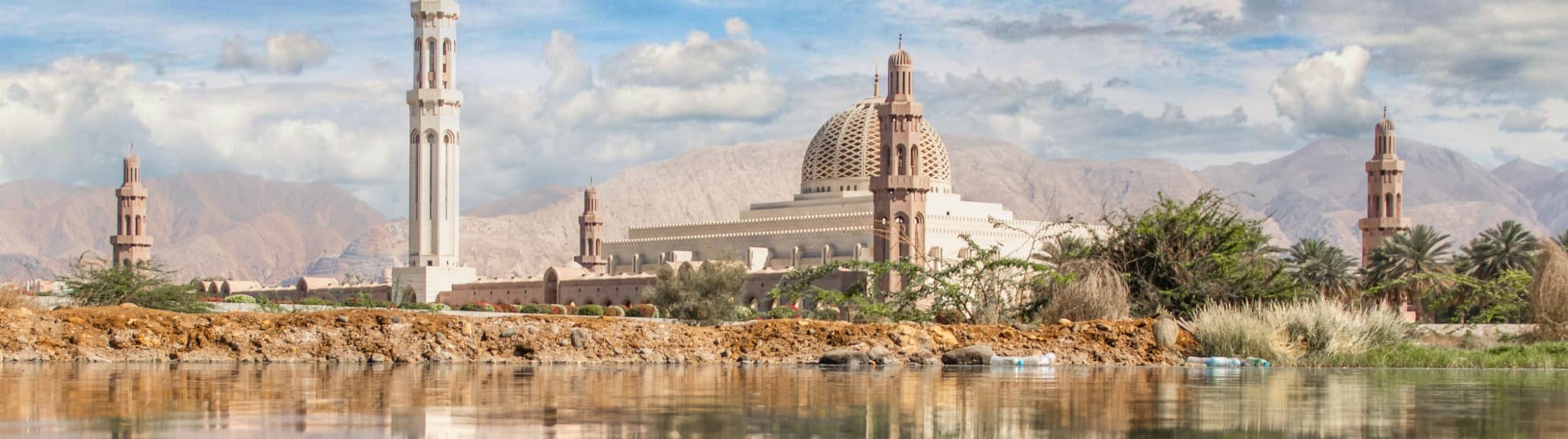
Emigrating to the Oman
Visa, safety, costs, and climate in Oman: a reality check
Price Calculator
Price Calculator
A few steps to your personal price
Step 1 of 3
Don't know your moving volume? In the next step, simply describe your move in your own words — our AI estimates the volume for you.
- Route
- Size
- Contact
Where is your move going?
Enter the loading and unloading address — we calculate the route for your move.
Don't know your moving volume? In the next step, simply describe your move in your own words — our AI estimates the volume for you.
- Truck
- Container
- Plane
Non-binding and free — a survey only comes if you want one.
Emigrating to Cyprus: The most important answers first
✓ Visa required: Entry is only possible with a visa; the appropriate work, family, or study permit is required for longer stays.
✓ A solid economy: Oil and gas remain the foundation, while logistics, manufacturing, and services are becoming important.
✓ The security situation is currently sensitive: The overall situation is currently tense, while classic everyday crime remains limited.
✓ Healthcare system: Medical care is generally good in larger centers, but private coverage remains important.
✓ An extremely hot climate: Inland areas are very hot and dry, while the coast is hot and humid.
✓ Language skills: Arabic is the official language, while English is widely used in everyday life and in professional settings.
✓ Special feature: Oman offers scenic diversity, historical distinctiveness, and a comparatively calmer Gulf profile.
✓ Moving with pets: Good preparation and complete documentation are required
Relocating made easy with DACHSER & KOLB. Use our moving cost calculator. Get a quote and consultation. Book a tour. Move.
Facts about Oman

Capital City
Maskat

Population
5.3 million

Surface Area
119499,004 mi² or 309,501 km²

Continent
Asia

Official Language
Arabic

Currency
Oman Rial (OMR)
What are the customs, visa, and entry requirements for the Oman?
For German citizens, a visa is required to enter Oman. For short stays, the official eVisa is the standard and most practical route. For work stays, family reunification, or other long-term models, however, separate visa categories are required. In addition, travel documents must still be valid for at least six months upon entry. Even with a visa, the final entry decision remains at the discretion of the authorities.
Documents required for entry:
- Passport: Yes
- Temporary passport: Yes, but in individual cases it may be refused by airlines.
- National ID card: No
- Temporary national ID card: No
- Child passport: Yes
Tip for expats: Oman tends to feel more formal at entry than many people expect. First get your visa pathway, purpose of stay, employer or sponsor setup, and shipment properly aligned, then schedule the move.
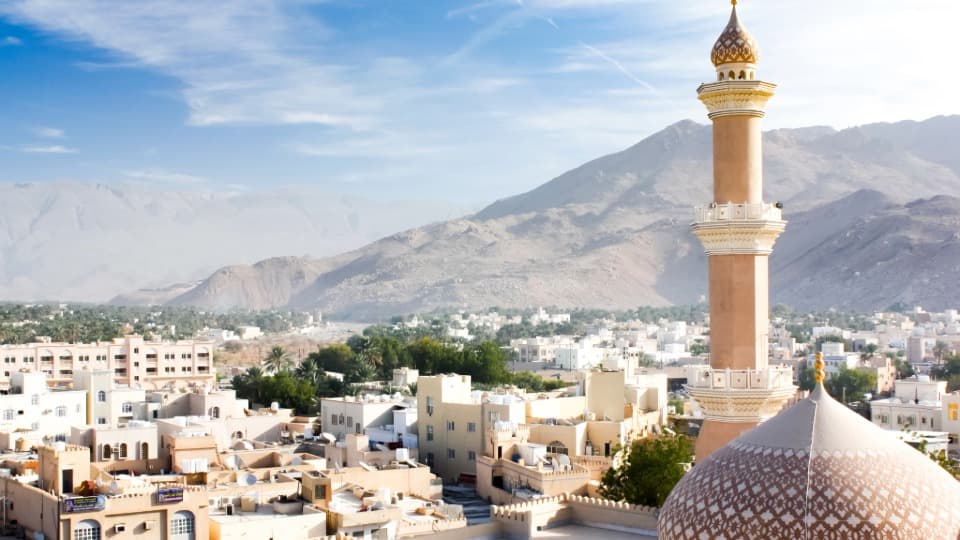
What are the economic conditions and standard of living like in Oman for expats?
Oman is no longer a purely oil-based location, even though oil and gas still form the foundation of the economy. The government is actively driving diversification toward logistics, tourism, manufacturing, mining, energy, and trade. That makes the market full of opportunity, but not automatically easy to access. Overall, Oman’s economic profile is strong, but still clearly regulated and relationship-driven.
Key facts at a glance:
- Good growth, with average GDP growth of 3% per year (1999–2023).
- Income distribution: Gini coefficient = 55.7 (0 = perfect equality; 100 = maximum inequality)
- Oil and gas remain economically important
- Logistics continue to gain importance
- Tourism and integrated tourism projects are being actively expanded
- Manufacturing and mining are part of the diversification strategy
- Infrastructure and port locations play a major role
- The market is full of opportunity, but not automatically easy to access
Tip for expats: Oman is especially attractive economically for people with a clear role, a strong network, and a solid budget. Anyone focusing only on Gulf glamour or tax logic can quickly underestimate the market structure, pace, and legal framework.
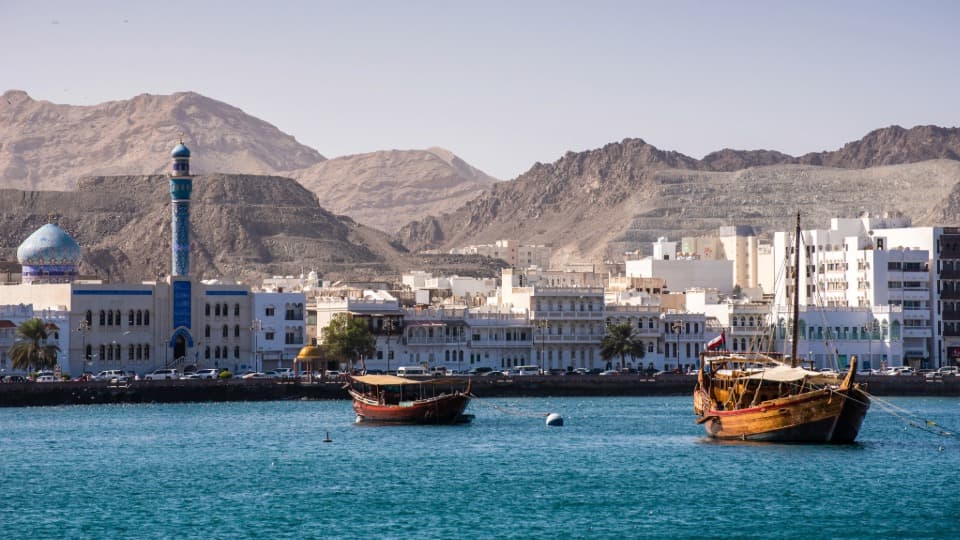
Safety in Oman: What do expats need to know?
Oman was long considered one of the more stable countries in the region, but the security situation currently needs to be assessed much more sensitively. There is currently a travel warning for Oman because of the tense regional situation. In addition, authorities point to an abstract terrorism risk. Classic everyday crime remains comparatively low, but cautious behavior is still advisable.
What expats should know:
- Pay attention to travel warnings
- Regional escalations can affect travel and air traffic
- Keep the abstract terrorism risk in mind
- Everyday crime is comparatively low
- Still do not leave vehicles and valuables unattended
- Your place of residence and travel routes should be planned and thought through in advance
Tip for expats: Anyone living in Oman should not look at security only in terms of where they live. Flight planning, emergency communication, and the regional situation also matter. Good planning and preparation help minimize risk.
What is the healthcare system like in Oman?
Oman’s healthcare system is generally well developed, especially in Muscat and other larger centers. Public services, however, are not automatically available free of charge to expats to the same extent. In emergencies, stabilization is provided, but foreign patients are often referred to private facilities afterward.
At a glance:
- Medical care in larger centers is generally good
- For expats, the private sector is especially relevant
- Emergency care is available, but follow-up treatment may continue privately
- Good health insurance is therefore essential
- Medication and treatment costs should be considered in advance
- Clarify clinic choice and access beforehand
Tip for expats: Anyone moving to Oman should make sure their health insurance is truly reliable. What matters is secure access to clinics, clear emergency procedures, and sufficient coverage, ideally all planned before the move.
Are you planning to move to the Oman?
With structured preparation, you can avoid financial surprises. Our moving cost calculator provides clarity — it's simple, convenient, and takes just a few steps.
Sun and heat – what is the climate like in Oman?
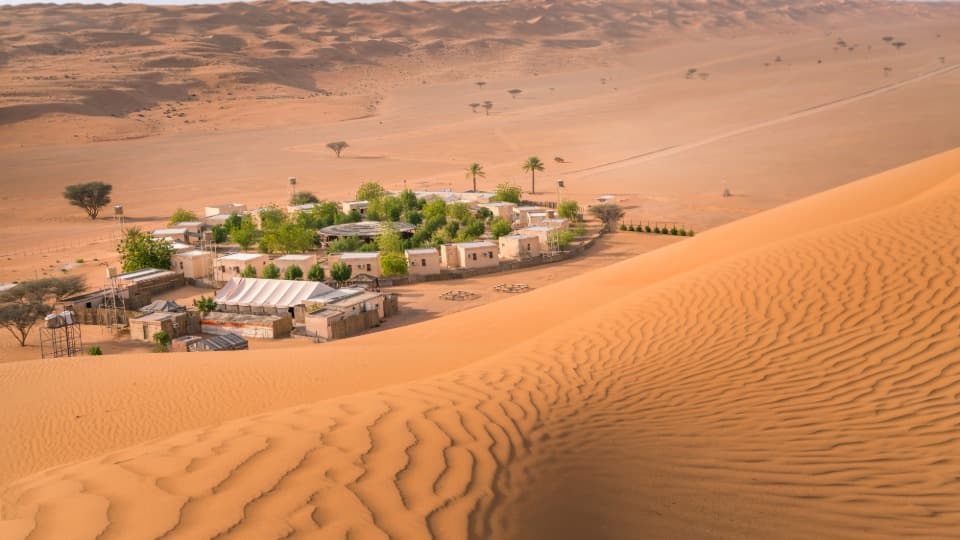
Oman has a predominantly hot desert climate. Inland, it is very hot and dry, while the coast is hot and humid. In Muscat, summer temperatures often rise to around 43°C, and in inland areas they can be even higher. Dhofar in the south is the major climate exception: there, the summer monsoon creates significantly milder and greener conditions around Salalah.
What the climate means for your daily life:
- Inland: hot and dry
- Coast: hot and often very humid
- Summer in Muscat often reaches around 43°C, with inland areas sometimes even more extreme
- Winter is noticeably milder
- Dhofar/Salalah feels climatically very different in summer
- Rainfall is generally rare, but can be intense locally
Tip for expats: Anyone who reads Oman only as “warm and sunny” is planning too narrowly. Heat, humidity, car dependency, and an everyday life that largely takes place indoors are key parts of the location.
What shapes language, culture and daily life in Oman?
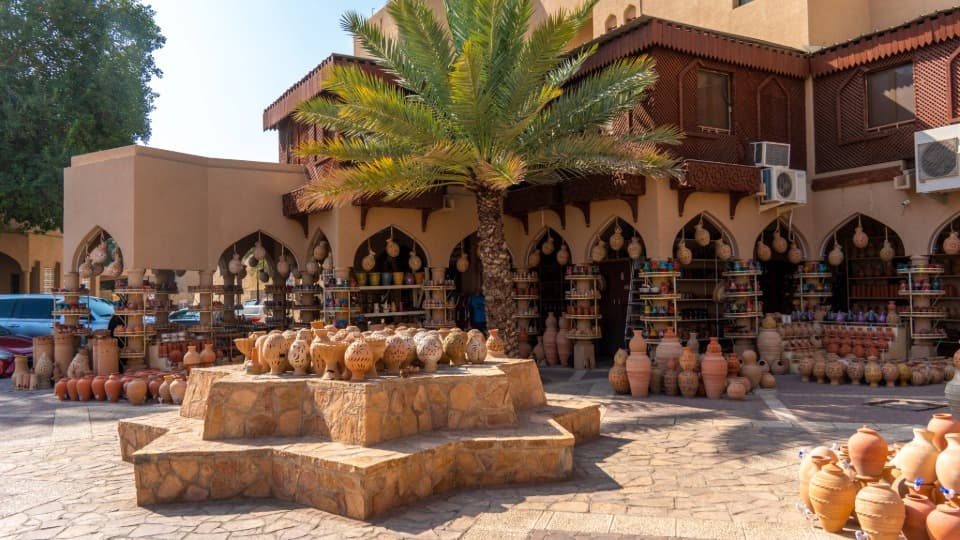
Arabic is the official language of Oman. English is, however, widely used and very present in professional life as well as in many service sectors. That is exactly what makes Oman more accessible in everyday life for international professionals than many initially expect. At the same time, the social framework remains clearly Arab and culturally more conservative than in many Western countries.
What really helps in everyday life:
- Arabic is the official language
- English is widely usable
- Everyday life and business often run bilingually
- Cultural sensitivity remains important
- Religion strongly shapes public life
- A modest public presence makes settling in easier
Tip for expats: English will get you far in Oman. Everyday life becomes truly smooth only when you also take cultural codes seriously and engage with local realities.
What makes the Oman special?
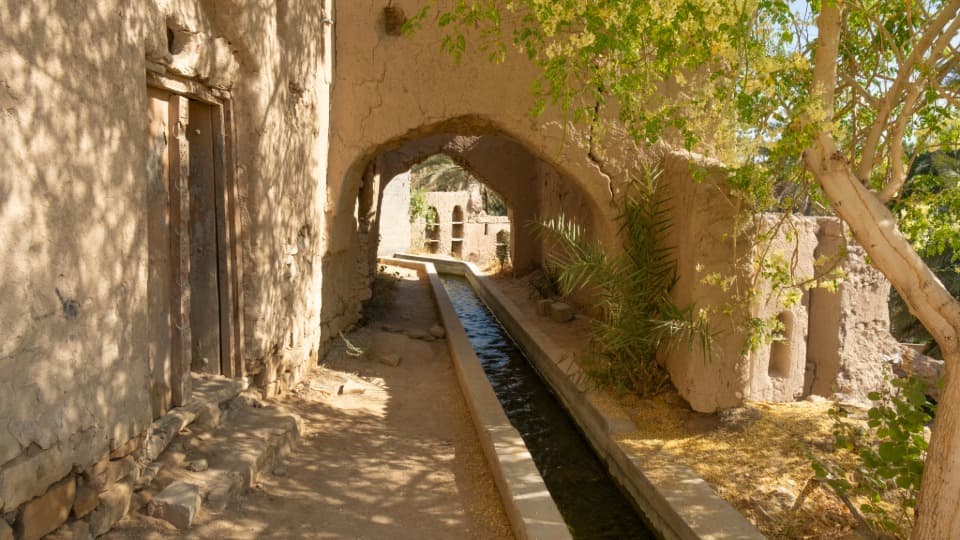
Within the Gulf region, Oman stands out above all for its mix of scenic diversity, historical distinctiveness, and a comparatively calmer profile. Rather than offering only skyline and megaprojects, the country brings together coastlines, mountains, wadis, desert, and traditional irrigation systems within a compact space. That very mix makes Oman a more distinctive emigration destination than many other Gulf states.
In detail:
- Wadis and mountains strongly shape the country
- Coastline and desert lie close together
- Traditional Aflaj irrigation systems are a cultural hallmark
- Oman feels calmer and more landscape-oriented than many neighboring states
- Nature and tradition are more visible than pure urbanization
- The country has a very distinct Gulf profile
Tip for expats: Oman is especially interesting for people who, in the Gulf, are looking not only for a business hub, but also for landscape, calm, and a less extreme urban profile. That is exactly what makes the location appealing to many people.

What should you bear in mind when moving to the Oman with animals?
A move with pets to Oman is a formal process and should be prepared early. Officially, Oman requires a prior veterinary import permit for dogs and cats, an official health certificate, vaccination records, and a rabies antibody titer test. In addition, official sources note that animals must meet certain age requirements.
What you should keep in mind:
- Vaccination card or proof of immunization is required
- Prepare all veterinary documents completely in advance; an official veterinary health certificate and rabies titer test are required
- Train your pet to use the travel crate before the flight
- Coordinate entry requirements and airline regulations; an import permit is required
- Minimize stress for your pet on moving day
- Actively support your pet’s adjustment to the new home
- Observe the age limits for dogs and cats
Tip for expats: For moving to Oman with a pet, the permit, health certificate, vaccination status, and travel date all need to align properly. Anyone who starts too late often creates last-minute problems.

For whom is the Oman a suitable destination for emigration?
Oman is especially well suited to people with a clear professional profile, solid income, and realistic expectations when it comes to rules, climate, and residence pathways. The country is a good fit for expats with an employer or sponsor structure, for professionals in logistics, energy, industry, construction, or tourism, and for people who see the Gulf not only as a business region, but also as a place to live.
Checklist before emigrating to Oman:
✓ Check entry requirements and residence regulations for Oman
✓ Secure health insurance and medical care coverage in Oman
✓ Choose the right place to live in Oman and arrange your initial accommodation
✓ Plan your emigration budget for Oman, including a financial buffer
✓ Prepare your move to Oman carefully, including household goods and documents
✓ Use English confidently and build basic Arabic skills.
Conclusion: Emigrating to Oman can be highly attractive, especially because of its stability, scenic distinctiveness, strong economic base, and high quality of everyday life for the right expat profiles. At the same time, the country requires a realistic view of visas, healthcare, climate, and the currently sensitive security situation.
FAQs for emigrating to the Oman
What do I need to consider when emigrating to Oman?+
Anyone planning to emigrate to Oman should clarify visa requirements, residence status, health insurance, place of residence, budget, and the current security situation early on. Tourist entry is not sufficient for work or permanent residence, and because of the formal residence logic, careful preparation is especially important here.
What visa and entry requirements apply to Oman?+
For German citizens, a visa is generally required to enter Oman. The practical standard route runs through the official Royal Oman Police eVisa system. Tourist, sponsored, and residence visas are all applied for digitally there.
Is Oman a safe country to emigrate to?+
Oman was long considered one of the more stable countries in the region, but the situation currently needs to be assessed much more sensitively. There is currently a travel warning because of the regional escalation, which may also affect transit stays.
What is the healthcare system like in Oman?+
Medical care in Oman is generally usable, especially in larger centers. For expats, however, it is important to know that public services are not automatically available free of charge to the same extent, which is why private facilities are often the realistic standard option.
What language is spoken in Oman?+
The official language in Oman is Arabic. English is, however, widely used and strongly present in business life as well as in many everyday situations, which makes getting started noticeably easier for international professionals.
What is the climate like in Oman?+
Oman has a predominantly hot desert climate. Inland areas are generally hot and dry. The coastal regions are hot and humid, while Dhofar in the south is noticeably milder and greener due to the summer monsoon.
Who is emigrating to Oman a good fit for?+
Oman is especially well suited to people with a clear professional profile, solid income, and realistic expectations regarding rules, climate, and residence pathways. The country is particularly attractive for expats with an employer or sponsor structure, as well as for professionals in logistics, energy, industry, construction, and tourism.
Are you interested in moving to the Oman or another destination country?
Then do not hesitate and contact us today.

Related topics

Relocation Service for Individuals
With our relocation service for private individuals, DACHSER & KOLB ensures a relaxed new start abroad and accompanies you throughout your private move from start to finish – personally, reliably, and worry-free.

Relocation Service for Expats
Support for international professionals during onboarding at the new destination. We assist your expats with home search, administrative procedures, and visa processes for a fully secure and smooth “soft landing”.

International Move
Have you been bitten by the travel bug and would like to emigrate? Then you have come to the right place and your belongings are in the best of hands. For many years there has been nothing we would rather do than organize international removals across continents. Whether by ship, by plane or over land.