

Emigrating to Brazil
Visa, safety, costs, and climate in Brazil: a reality check
Price Calculator
Price Calculator
A few steps to your personal price
Step 1 of 3
Don't know your moving volume? In the next step, simply describe your move in your own words — our AI estimates the volume for you.
- Route
- Size
- Contact
Where is your move going?
Enter the loading and unloading address — we calculate the route for your move.
Don't know your moving volume? In the next step, simply describe your move in your own words — our AI estimates the volume for you.
- Truck
- Container
- Plane
Non-binding and free — a survey only comes if you want one.
Emigrating to Brazil: The most important answers first
✓ Visa-free entry: Entry without a visa is possible; visas are required for longer stays.
✓ Attractive but diverse economy: South America’s largest economy, though there are significant regional differences.
✓ Safety situation: High crime rates in major cities; avoid border areas; quality of life depends on location.
✓ Public healthcare system: Healthcare is publicly funded and accessible free of charge, but varies by region.
✓ Diverse climate zones: Seasons with wet and dry periods, average temperatures around 25 °C.
✓ Language skills: Portuguese is the official language; English and Spanish are not sufficient.
✓ Special feature: Largest rainforest in the world; Brazil is also known for its carnival.
✓ Moving with pets: Thorough preparation required; entry ban on birds.
Make moving easy with DACHSER & KOLB. Use the moving cost calculator. Get a quote and consultation. Book a tour. Move.
Facts about Brazil

Capital City
Brasilia

Population
214.3 million

Surface Area
5,287,868.85 mi² or 8,510,000 km²

Continent
South America

Official Language
Portuguese

Currency
Brasilian Real (BRL)
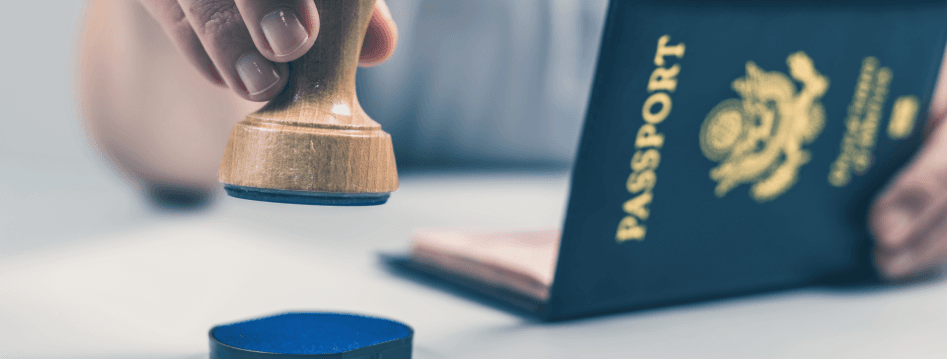
What are the customs, visa, and entry requirements for Brazil?
Entry into Brazil for tourism or business purposes is visa-free. However, this is not sufficient for permanent relocation: Anyone wishing to stay longer than 90 days, work, study, or establish residency must apply for the appropriate visa before departure and then complete the registration process in Brazil properly. It is not possible to obtain a visa retroactively in Brazil.
Documents required for entry:
- Passport: Yes
- Temporary passport: Yes
- ID card: No
- Temporary ID card: No
- Child passport: Yes
Tip for expats: In Brazil, sort out your visa first, then organize your move. If you prepare your residence permit, registration with the Federal Police, and the import of your household goods at the same time, you’ll save yourself a lot of hassle later on.
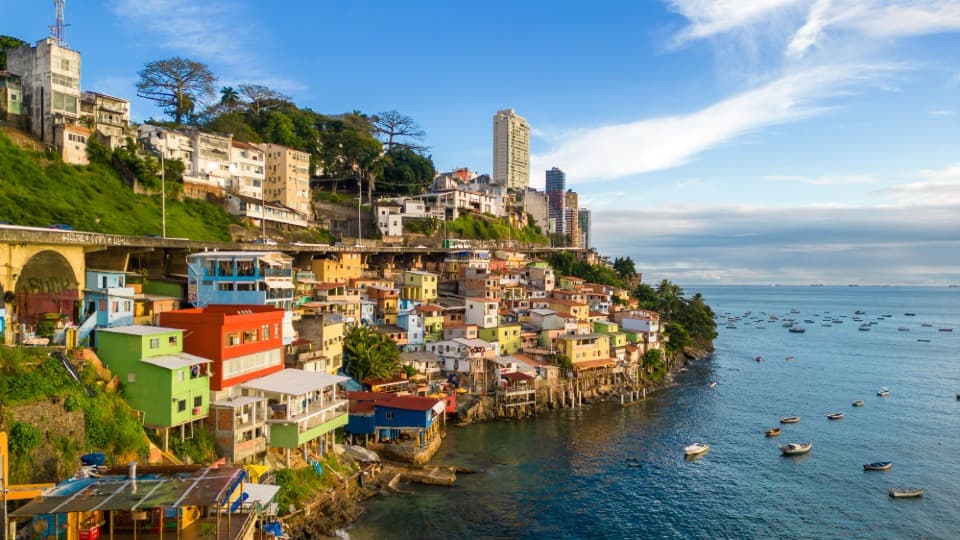
What are the economic conditions and standard of living like in Brazil for immigrants?
Brazil is South America’s largest economy and has the region’s largest consumer market. As such, Brazil offers opportunities, but living conditions, safety, infrastructure, and purchasing power vary significantly depending on the region and income level.
Key points at a glance:
- Robust growth, averaging 2–4% GDP growth per year (2012–2025), varying by sector.
- Income distribution: Gini coefficient = 51.6 (0 = perfect equality; 100 = maximum inequality), indicating high inequality
- Largest consumer market and largest economy in South America
- Opportunities primarily in a diversified market with strong service, industrial, and agricultural sectors
Tip for expats: Brazil is economically attractive but not homogeneous. Those who move to São Paulo, Rio, Florianópolis, or the south will find themselves in a completely different environment than in the north or the interior.
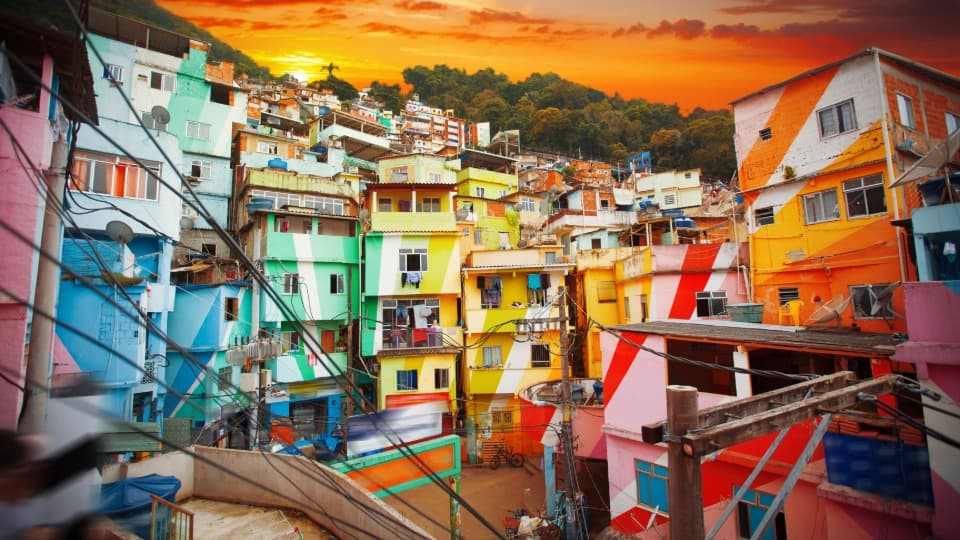
Safety in Brazil: What do expats need to know?
The security situation in Brazil is not a minor issue, but a key planning factor. The crime rate is very high—especially in major cities, on beaches, on roads leading to airports, and in favelas, where armed conflicts can also occur.
What expats should know:
- High crime rate in many major cities
- Favelas in cities like Rio are particularly sensitive
- Increased risks on beaches, in quiet streets, and on airport access roads
- It is better to book and pay for taxis directly inside the airport building
- Avoid the border area with Venezuela
- Summer: risk of bush and forest fires, as well as earthquakes and autumn storms
Tip for expats: In Brazil, location has a massive impact on quality of life. A good residential area, clear daily routines, and safe mobility should be factored into your plans from the very beginning.

What is the healthcare system like in Brazil?
Brazil has a public, universal healthcare system known as the SUS. At the same time, healthcare access is distributed very unevenly. In major urban centers, private healthcare is generally good but expensive, while the public sector varies greatly from region to region and often involves long wait times. In rural areas, the quality of care declines significantly.
At a glance:
- SUS is public, universal, and free of charge
- Care in the private sector of major urban centers is generally good, but costly
- The public sector varies greatly from region to region
- In rural areas, care is often significantly poorer
- No mandatory vaccinations upon entry from Germany; yellow fever and hepatitis A are recommended
- Malaria risk primarily in the Amazon Basin; major cities such as Rio, São Paulo, Recife, Fortaleza, and Salvador are considered malaria-free
Tip for expats: In Brazil, it is not enough to rely on the system. Those who clarify regional healthcare standards, vaccination status, private insurance coverage, and evacuation options in advance significantly reduce their risk.
Are you planning to move to Brazil?
With structured preparation, you can avoid financial surprises. Our moving cost calculator provides clarity — it's simple, convenient, and takes just a few steps.

What is the climate like in Brazil?
Brazil does not have a uniform climate, but rather several climate zones. Nationwide average temperatures hover around 25 °C, but there are significant regional differences: The north is generally hotter, while the south is noticeably milder to cooler in winter.
What the climate means for your daily life:
- Seasons are the opposite of those in Europe
- Nationwide average temperatures are around 25 °C
- The north is usually hotter and more tropical
- The south is noticeably milder to cooler in winter
- Rainy and dry seasons are more important than traditional seasons in many regions
Tip for expats: Brazil should never be thought of as a single country in terms of climate. Fortaleza, Manaus, São Paulo, and Porto Alegre offer completely different conditions for daily life, housing, and health.

What shapes the language, culture, and daily life in Brazil?
Portuguese is the official language of Brazil and is essential for everyday life. In tourist areas and major cities, English or Spanish is sometimes spoken as well, but outside these areas, Portuguese quickly becomes indispensable. Culturally, the country is shaped by samba, Carnival, Afro-Brazilian culture, regional cuisine, and a very vibrant street and everyday culture.
What really helps in everyday life:
- The official language is Portuguese
- English and Spanish are spoken only sporadically in tourist areas and major cities
- Samba is a central cultural marker, especially in Rio
- Carnival stands for creativity, music, and cultural diversity
- Afro-Brazilian influences strongly shape many regions, especially Salvador and Rio
Tip for expats: You won’t get very far in Brazil with just English. If you actively learn Portuguese, you’ll not only better understand government agencies and daily life, but you’ll also integrate socially much faster.
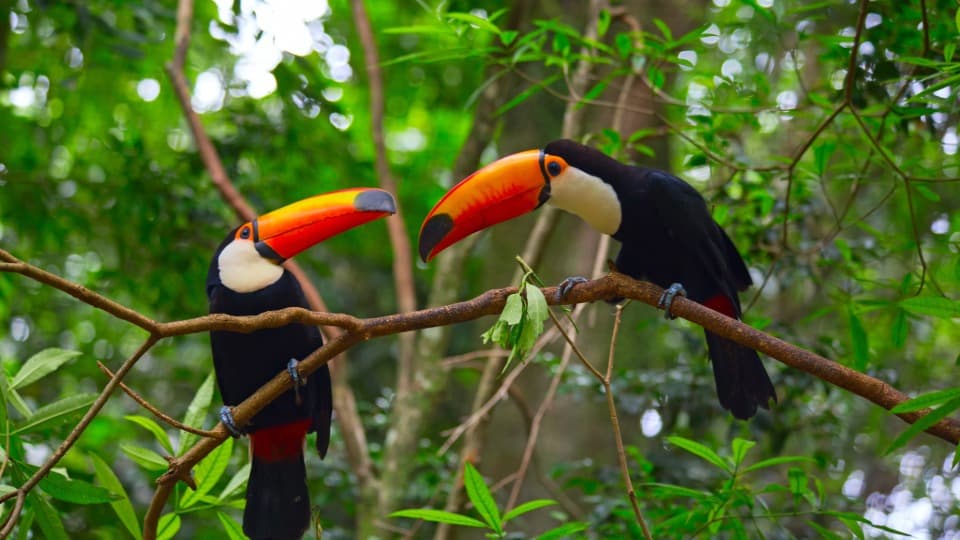
The Amazon, Carnival, and incredible diversity – what makes Brazil so special?
Brazil stands out above all for its extraordinary diversity. The country combines the world’s largest rainforest, world-renowned cities, Afro-Brazilian culture, spectacular coastlines, and the global symbolic significance of Carnival into a single destination for immigrants.
In detail:
- Central Amazonia is home to the world’s largest rainforest and UNESCO-recognized natural wonders
- Carnival is one of the country’s strongest cultural symbols
- Coastlines, major cities, rainforest, and waterfalls all exist within a single country
- Brazil uniquely combines nature, music, everyday life, and grandeur
Tip for expats: Brazil has more to offer than just sunshine and beaches. Its true competitive advantage lies in its unique blend of natural beauty, cultural vibrancy, and economic strength.

What should you keep in mind when moving to Brazil with pets?
Moving with pets to Brazil requires more advance planning than many people expect. In addition to transportation, veterinary documentation, deadlines, vaccinations, and animal welfare must be carefully coordinated. There is no quarantine period for importing cats or dogs.
What you should keep in mind:
- Check vaccination status well in advance
- Prepare complete veterinary documentation
- Get the pet carrier used to it before the flight
- Coordinate entry and flight requirements
- Minimize stress for the animal on moving day
- Actively support the animal’s adjustment to the new home
- Importing birds is prohibited
Tip for expats: When moving pets to Brazil, the distance isn’t the problem—it’s the paperwork. Vaccination status, veterinary documents, and airline requirements should be fully in order before booking.

For whom is Brazil a suitable destination for emigration?
Brazil is particularly well-suited for people who are looking for an international atmosphere, cultural vibrancy, big cities, or a tropical lifestyle, and who can handle complexity. The country is especially suitable for entrepreneurs, professionals with a local perspective, expats with employer-sponsored packages, those joining family members, investors, and remote workers with a clear visa pathway.
Checklist before moving to Brazil:
✓ Check entry requirements and residency regulations for Brazil
✓ Secure health insurance and medical care in Brazil
✓ Determine a suitable place to live in Brazil and arrange initial housing
✓ Plan a relocation budget for Brazil, including a buffer
✓ Prepare thoroughly for the move to Brazil with household goods and documents
✓ Improve your Portuguese skills to make daily life easier
Conclusion: Brazil captivates with its cultural diversity, impressive nature, and extraordinary vitality. The country is particularly attractive to people seeking internationality, a zest for life, a pleasant climate, and a dynamic environment—and who are ready to embark on a fresh start with a clear plan and thorough preparation.
FAQs for emigrating to Brazil
Do I need a visa to move to Brazil?+
German citizens may enter Brazil visa-free for up to 90 days for tourism or business purposes. However, anyone wishing to emigrate to Brazil, work there, study, or stay for a longer period must apply for the appropriate visa before departure.
How long can I stay in Brazil without a visa?+
German citizens may stay in Brazil for up to 90 days within a six-month period without a visa for tourism or business travel. This rule does not apply to longer stays.
Is Brazil a good country to emigrate to?+
Brazil can be a very attractive destination for expats because it combines economic strength, cultural diversity, a variety of lifestyles, and a warm climate. At the same time, quality of life depends heavily on the region, the security situation, income, and language skills.
How safe is Brazil for expats?+
The security situation in Brazil varies greatly from region to region. The country has a high crime rate, particularly in major cities, on beaches, along airport access roads, and in favelas, which is why choosing where to live and establishing safe daily routines are especially important.
How does the healthcare system work in Brazil?+
With the SUS, Brazil has a public, universal, and free healthcare system. In practice, however, the quality, accessibility, and wait times vary significantly by region and between public and private care.
Do I need to know Portuguese if I want to move to Brazil?+
Yes, Portuguese is very important for everyday life in Brazil. Portuguese is the official language. English and Spanish are helpful, especially in tourist areas and large cities, but they are usually not enough for long-term living in Brazil.
Can I move to Brazil with my dog or cat?+
Yes, it is generally possible to move to Brazil with a dog or cat. This requires an official veterinary document from the country of origin. The key documents needed for entry are the international veterinary certificate and an official pet passport.
Are you interested in moving to Brazil or another destination country?
Then do not hesitate and contact us today.

Related topics

Relocation Service for Individuals
With our relocation service for private individuals, DACHSER & KOLB ensures a relaxed new start abroad and accompanies you throughout your private move from start to finish – personally, reliably, and worry-free.

Relocation Service for Expats
Support for international professionals during onboarding at the new destination. We assist your expats with home search, administrative procedures, and visa processes for a fully secure and smooth “soft landing”.

International Move
Have you been bitten by the travel bug and would like to emigrate? Then you have come to the right place and your belongings are in the best of hands. For many years there has been nothing we would rather do than organize international removals across continents. Whether by ship, by plane or over land.