Emigrating to Tunesia Visa, safety, costs, and climate in Tunesia of Cyprus: a reality check
Emigrating to Tunesia: The most important answers first
✓ Visa-free entry: Germans can enter the country for up to 4 months without a visa.
✓ Economy is modest but promising: Opportunities exist primarily in tourism, services, industry, and trade.
✓ Security situation varies: Coastal areas are generally safer, while border and desert regions are more sensitive.
✓ Healthcare system varies by region: Generally better in Tunis; private insurance is often advisable.
✓ Climate ranges from Mediterranean to arid: Milder on the coast; significantly hotter and drier in the south.
✓ Language skills: Arabic dominates daily life; French is often very helpful.
✓ Special features: The Mediterranean, medinas, and the Sahara make Tunisia unique.
✓ Moving with pets: Thorough preparation, vaccination records, and health documentation are essential.
Make moving easy with DACHSER & KOLB. Use the moving cost calculator. Get a quote and consultation. Book a tour. Move.
Facts about Tunisia

Capital City
Tunis

Population
12.36 million

Surface Area
101,662.54 mi² or 163,610 km²
Continent
Africa

Official Language
Arabic

Currency
Tunisian dinar (TND)
What are the customs, visa, and entry requirements for Tunesia?
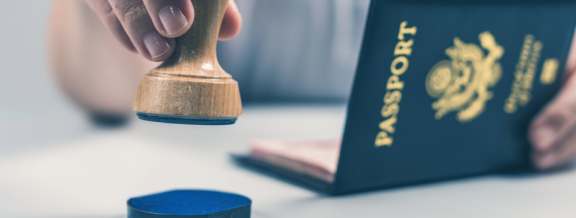
German citizens may enter Tunisia for tourist, private, or business stays of up to four months without a visa. Those wishing to stay longer must have a legal basis for residence and a residence permit. In addition, there are clear requirements regarding passports, validity, and, in some cases, proof of financial means upon entry.
Documents required for entry:
- Passport: Yes
- Temporary passport: Yes
- Identity card: Only for package tours with entry by air;
- proof of round-trip flight and hotel confirmation must be provided.
- Provisional ID card: No
- Child’s passport: Yes
Tip for expats: In Tunisia, clarify your residency status first, then plan your move. If you prepare your passport validity, entry documents, future residence card, and household goods simultaneously, you’ll avoid unnecessary delays later on.
The economy in Tunisia: What opportunities and living conditions are there for expats?
Tunisia is economically smaller than many traditional emigration destinations, but offers attractive opportunities through tourism, services, industry, and its geographical proximity to Europe. For emigrants, this means that Tunisia may seem suitable for everyday life and financially manageable, yet purchasing power, income levels, and infrastructure vary greatly from region to region.
Key facts at a glance:
- Strong growth, averaging 2–3% GDP growth per year (2001–2025).
- Income distribution: Gini coefficient = 33.7 (0 = perfect equality; 100 = maximum inequality)
- Key sectors: tourism, services, industry, and trade
- Coastal regions and Tunis are economically significantly stronger than the interior
- Price levels are often lower than in many Western European countries
- Income and infrastructure are distributed noticeably more unevenly across regions
- Living comfort and amenities depend heavily on location
- Economic momentum remains, but is not consistently robust
Tip for expats: Tunisia is economically attractive, but not a country for rough budget estimates. Those who realistically factor in rent, transportation, private healthcare costs, and a solid financial buffer will make a better decision about where to live.
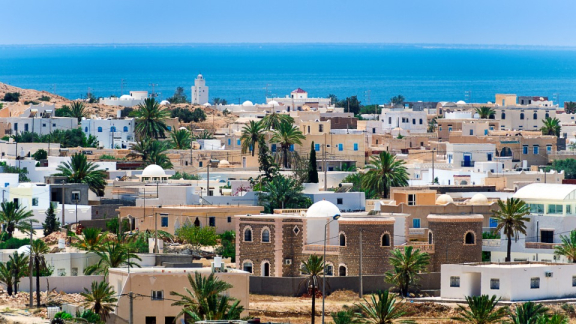
Safety in Tunesia: What do expats need to know?
Tunisia is generally a manageable destination for expatriates, but safety remains a clear concern in everyday life. More relevant than typical street crime are thefts, attempted fraud, tourist risk zones, and, above all, the significantly more sensitive situation in border and desert regions. The situation has stabilized in tourist centers, yet there remains an elevated risk of terrorist attacks, and southern or border areas require significantly greater caution.
What expats should know:
- Exercise increased caution in old towns, bazaars, train stations, and on public transportation
- “False guides,” aggressive begging, and credit card/money fraud occur
- Tourist coastal towns are safer than border and desert regions
- South of the tourist-developed Sahara routes, the risk is significantly higher
- Proximity to the borders with Libya and Algeria is a security concern
- Plan organized desert tours only with a guide familiar with the area
Tip for expats: In Tunisia, the specific location matters more than the country as a whole. Those who prioritize safe neighborhoods, well-defined routes, and a realistic safety profile will live a much more relaxed life.
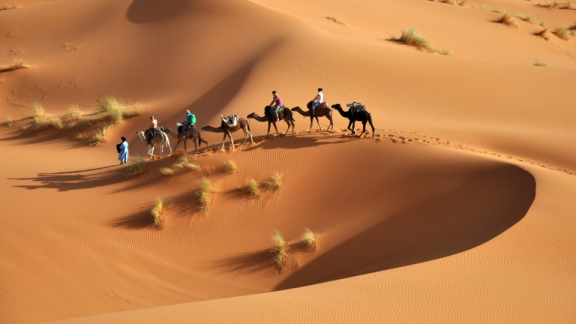
What is the healthcare system like in Tunesia?
The healthcare system in Tunisia consists of a public, a private, and a para-public sector. In Tunis, the standard of care is significantly higher and there are well-equipped private clinics, whereas outside the capital, noticeable limitations are to be expected. Private international or supplemental insurance is therefore advisable, especially if you wish to ensure coverage for treatment in private clinics or medical repatriation.
At a glance:
- Public, private, and para-public systems coexist
- Tunis has significantly better medical care than many regions outside the capital
- Private clinics in urban areas are often better equipped
- Public hospitals outside major centers sometimes provide only basic care
- Travel or expat health insurance with repatriation coverage is highly recommended
- Vaccination status, drinking water hygiene, and insect protection remain relevant in daily life
Tip for expats: Healthcare in Tunisia should always be factored into your plans in advance. Those living near Tunis or a major urban center who plan for private coverage significantly reduce future risks.
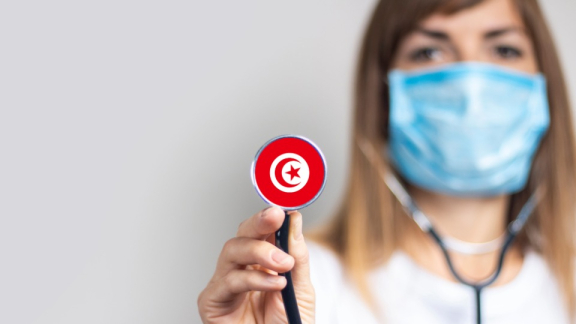
Are you planning to move to Tunesia?
With structured preparation, you can avoid financial surprises. Our moving cost calculator provides clarity — it's simple, convenient, and takes just a few steps.
What is the climate like in Tunesia?
Tunisia does not have a uniform climate. The north and the east coast have a Mediterranean climate, while the interior is drier and the south is significantly hotter and more arid. Summers are hot and dry in many places, while winters in the north are cooler and wetter, and the south often remains mild and dry. Especially when it comes to daily life, living comfort, and choosing a place to live, these differences are more important than the mere image of a “sunny country.”
What the climate means for your daily life:
- Mediterranean climate in the north and on the east coast
- Inland areas are semi-arid
- South significantly hotter and drier
- Summers on the coast are more pleasant than inland
- In the south, temperatures above 40 degrees are possible
- Rain falls irregularly and varies greatly by region
Tip for expats: In Tunisia, never choose a place to live based solely on a sea view or price. Tunis, Hammamet, Sousse, Djerba, and the south offer very different climatic conditions for daily life.
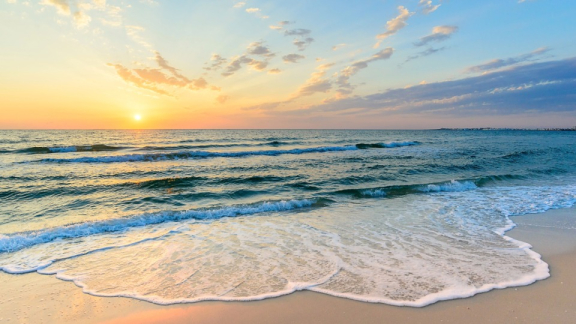
Diversity in Tunesia? – Language, culture, and everyday life
The official language is Arabic, but Tunisian Arabic dominates everyday life. French is widely used in government offices, education, business, and urban life, while English is particularly helpful in tourist areas. Culturally, Tunisia is shaped by Arab, Mediterranean, and regional influences. Medinas, crafts, cuisine, and regional traditions are clearly visible in everyday life.
What really helps in everyday life:
- Arabic is the official language
- Tunisian Arabic shapes everyday life
- French is very relevant in urban and administrative settings
- English is particularly helpful in tourist contexts
- Medinas, crafts, and regional cuisine shape the everyday landscape
- Cultural differences between the coast, the capital, and the south are noticeable
Tip for expats: You can often get by well in Tunisia with French, but you’ll gain a much deeper understanding with Arabic. Those who take the language and regional culture seriously build trust more quickly and navigate daily life more easily.
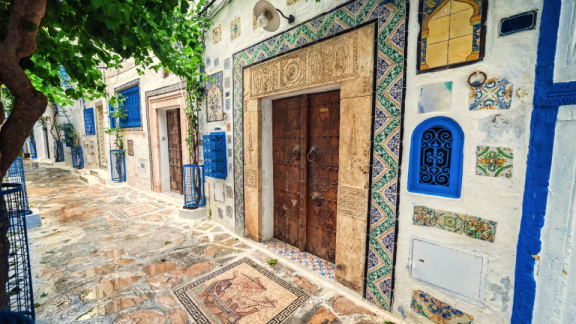
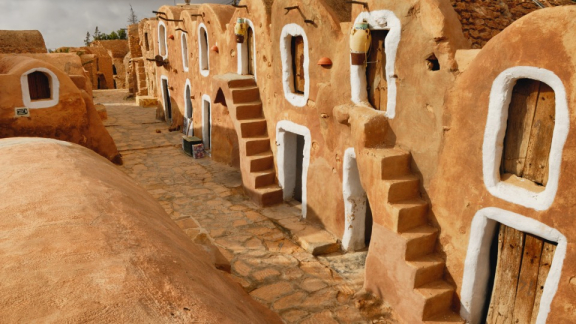
What makes Tunisia special? - The Mediterranean, the Sahara, and medinas, all in one country.
Tunisia stands out above all for its remarkable diversity of landscapes and cultural regions. The coast, Carthage, historic medinas, Berber villages, oases, and the Sahara region are all situated in close proximity within a relatively small country. It is precisely this combination of the Mediterranean, the desert, and a rich historical heritage that makes Tunisia a particularly distinctive destination for expats.
In detail:
- Mediterranean coast and seaside resorts in the north and east
- The Sahara and oases define the south
- Carthage and historic sites represent rich cultural heritage
- Medinas and crafts are part of everyday life in many places
- Berber villages and desert regions create strong regional contrasts
- Nature, history, and everyday life are closely intertwined in Tunisia
Tip for expats: Don’t just use your first few weeks in Tunisia for registration and house hunting, but also for specific weekend trips between the coast, the medinas, and the south. Those who consciously experience multiple regions will more quickly develop a realistic sense of where to settle down.
What should you bear in mind when moving to Tunesia with animals?
Moving with pets to Tunisia requires thorough preparation. A rabies vaccination is required for certain pets. In addition, veterinary health records must be complete and coordinated with the airline and the relevant authorities. Especially when entering from non-EU countries or on more complex routes, documentation is more important than improvisation.
What you should keep in mind:
- Check vaccination status well in advance – rabies vaccination is important for dogs, cats, and ferrets
- Prepare complete veterinary documentation
- Get the pet carrier used to it before the flight
- Coordinate entry and flight requirements
- Minimize stress for the animal on moving day
- Actively support the animal’s adjustment to the new home
- Additional requirements may apply for special cases or exotic animals
Tip for expats: When moving pets to Tunisia, accuracy is key. Vaccination status, health certificates, and travel itinerary should be fully coordinated before booking to avoid unnecessary delays upon entry.

For whom is Tunesia a suitable destination for emigration?
Tunisia is particularly well-suited for people seeking a Mediterranean climate, manageable distances, and a rich blend of culture, coastline, and North African heritage. The country is especially ideal for self-employed individuals, remote workers with a stable income, people open to regional differences, and expats who are looking not for maximum Western standardization but for a more flexible daily life with character.
Checklist before moving to Tunisia:
✓ Check entry requirements and residency regulations for Tunisia
✓ Secure health insurance and medical care in Tunisia
✓ Determine a suitable place of residence in Tunisia and arrange initial housing
✓ Plan an emigration budget for Tunisia, including a buffer
✓ Prepare thoroughly for the move to Tunisia, including household goods and documents
✓ Use Arabic or French to make daily life in Tunisia easier
Conclusion: Tunisia captivates with its sunshine, proximity to the coast, and an exciting blend of Arab, Mediterranean, and regional cultures. The country is particularly appealing to people seeking a warm climate, manageable distances, and a fresh start with plenty of character that’s well-suited to everyday life.

FAQs for emigrating to Tunesia
Do I need a visa to move to Tunisia?
German citizens may enter Tunisia without a visa for stays of up to four months. However, anyone wishing to live in Tunisia permanently or stay for a longer period must have the appropriate legal basis for their stay.
How long can I stay in Tunisia without a visa?
German citizens may generally stay in Tunisia for up to four months without a visa. If this limit is exceeded, departure fees may apply.
Is Tunisia a good country to emigrate to?
Tunisia can be an attractive destination for expats because it combines a Mediterranean climate, relatively short travel distances, and a cost of living that is often lower than in many Western European countries. However, daily life and quality of life depend heavily on where you live, the safety situation, and access to healthcare.
Is Tunisia safe for expats?
In many places, everyday life in Tunisia is quite manageable; however, theft, attempted fraud, and more sensitive border and desert regions remain a significant concern. Tourist coastal towns and the capital region, in particular, differ significantly from southern and border areas.
How good is the healthcare system in Tunisia?
Tunisia has a public, private, and semi-public healthcare system. Healthcare is generally better in Tunis, but outside the capital, patients often face limitations, which is why private health insurance makes sense for many expats.
Do I need to know Arabic or French if I want to move to Tunisia?
Yes, at least one of the two languages is very useful in everyday life. Arabic plays a major role in daily life, while French is often particularly useful in urban, administrative and business contexts.
Can I move to Tunisia with my dog or cat?
Yes, moving to Tunisia with a dog or cat is generally quite feasible. The most important things are a valid rabies vaccination, proper veterinary documentation and compliance with the general entry requirements for pets.
Are you interested in moving to Tunesia or another destination country?
Then do not hesitate and contact us today.
Sabrina Klier
Customer Service & Sales - AIR & SEA