

Moving to Thailand with pets – stress-free and animal-friendly
DACHSER & KOLB: Consulting, process planning, partner for professional animal transport.
Price Calculator
Don't know your moving volume? In the next step, simply describe your move in your own words — our AI estimates the volume for you.
- Route
- Size
- Contact
Where is your move going?
Enter the loading and unloading address — we calculate the route for your move.
Don't know your moving volume? In the next step, simply describe your move in your own words — our AI estimates the volume for you.
- Truck
- Container
- Plane
Non-binding and free — a survey only comes if you want one.
Sun, sand, and palm trees—Thailand is a dream destination for expats. Careful and structured planning is essential to ensure that your pets also have a smooth start to their new life in the “Land of Smiles.” The Thai authorities have clear requirements regarding the health and documentation of dogs and cats. Moving your pet to Thailand is stress-free if the import permit, vaccinations, health certificate, and transport are planned properly.
DACHSER & KOLB supports you in setting up the entire process in a structured manner and ensuring that your pet arrives safely in Bangkok, Phuket, or Chiang Mai.
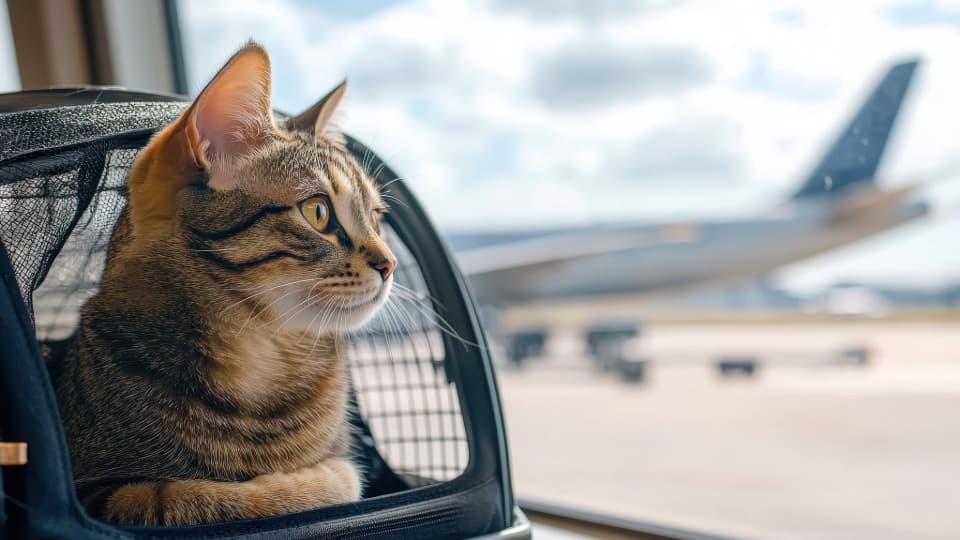
Early planning and documents for a stress-free move to Thailand with pets
The following applies in particular to dogs, cats (and some rabbits):
✓ Apply in advance for an import permit from the Department of Livestock Development (DLD) (form R.1/1).
✓ Pets must be clearly identified by microchip (ISO 11784/11785).
✓ Valid rabies vaccination + other mandatory vaccinations depending on the type of animal.
✓ Official health certificate shortly before departure.
✓ Registration at the Animal Quarantine Station (AQS) at the airport of arrival, receipt of Notice of Import Approval (R-6) and Import License (R-7), fee approx. 500 THB per animal.
✓ Depending on the country of origin: quarantine or home quarantine if requirements are not fully met.
Related topics
- Customs regulations Thailand → Find out more now
- Emigrating to Thailand? → All the important information
- Entry requirements Thailand → What you need to know
Health and vaccination requirements for moving animals to Thailand

Vaccinations
Dogs: rabies, distemper, hepatitis, parvovirus, leptospirosis. Cats: rabies, feline panleukopenia. Animals must be at least 12 weeks old at the time of initial vaccination. A waiting period of at least 21 days between vaccination (rabies) and entry is mandatory.

Microchip & minimum age
Animals must be at least 4 months old upon entry. Mandatory: Microchip in accordance with ISO 11784/11785 (15-digit number). If a different chip is implanted, a compatible reader should be carried. The microchip number must be entered identically on all documents (vaccination certificate, health certificate, import permit).

Worm treatment
Deworming and treatment against fleas/ticks are usually expected within 7-10 days prior to departure. Details (preparation, date) must be documented in the vaccination certificate/health certificate.
- !
Official health certificate
In addition to the vaccination certificate and import permit, you will need an official health certificate:
✓ issued by an authorized/official veterinarian in the country of origin,
✓ completed in English,
✓ typically within 10 days prior to departure – depending on the country of origin, 72 hours may be required, especially by export authorities (e.g., USDA, EU official veterinarian).
✓ In some countries of origin (e.g., USA, UK), the certificate must also be endorsed by the relevant government authority (USDA APHIS, APHA, etc.).
Preparation and well-being of your pet

Get your pet used to the transport box, long journeys, and loud noises at an early stage.

Adjust feeding before the flight: do not give a “full meal” shortly before departure—it is better to feed lightly and early, and offer sufficient water. Only use sedatives after consulting your veterinarian—do not do so “on your own.”

In Thailand, quickly find a local veterinarian and adjust the vaccination schedule (tropical diseases, parasites, additional vaccinations if necessary).
Step by step – How to ensure a smooth entry into Thailand with your pet
- 1.
8–12 weeks before departure
- Check/implant microchip.
- Check vaccination status with veterinarian, plan basic immunizations and boosters if necessary.
- Determine destination airport for entry (e.g., Bangkok BKK, Phuket HKT, Chiang Mai CNX).
- 2.
6–8 weeks before departure
- Import Permit: Send application R.1/1 including all documents to the relevant Animal Quarantine Station. This is the most important document. You must apply for the permit at least 7 to 60 days before departure at the Animal Quarantine Station (AQS) of the destination airport: Suvarnabhumi International Airport (qsap_bkk_import@dld.go.th); Phuket International Airport (qshk_hkt@dld.go.th); Chiang Mai International Airport (qscm_cmi@dld.go.th)
- Arrange airlines/carriers for animal transport (cabin, excess baggage, cargo).
- Plan your schedule so that the import permit is valid upon entry (45–60 days).
- 3.
2–4 weeks before departure
- Receive the import permit by email, print it out, and add it to your travel documents.
- Schedule deworming and parasite treatment for your pet.
- Purchase a transport crate that meets airline/IATA specifications and get your pet used to it.
- 4.
3–10 days before departure
- Have a final veterinary examination performed.
- Have an official health certificate issued in English (including government confirmation, depending on the country).
- Document deworming/parasite treatment.
- 5.
On the day of departure
- Be at the airport in good time (check-in with animals takes longer).
- All documents in your hand luggage:
- Import Permit (R.1/1 confirmation),
- Vaccination Record,
- Health Certificate,
- Copy of passport, Photo of animal.
- 6.
Upon arrival in Thailand
- Zur Animal Quarantine Station (AQS) am Flughafen (z. B. Suvarnabhumi: in der Nähe der Gepäckbänder / separates AQS-Office).
- Vorlage von Original Impfpass, Original Health Certificate, Import Permit (Ausdruck), Reisepass, Tier zur Identitäts- und Gesundheitskontrolle.
- Erhalt von Notice of Import Approval (R-6) und Import License (R-7) + Bezahlung der Gebühr (ca. 500 THB pro Tier).
- Je nach Bewertung: direkte Freigabe zur Weiterreise oder Anordnung von Quarantäne / Heimquarantäne (Dokumente falsch oder unvollständig, Impfung entspricht nicht Anforderung, Tiere aus Ländern mit höherem Risiko, etc.).
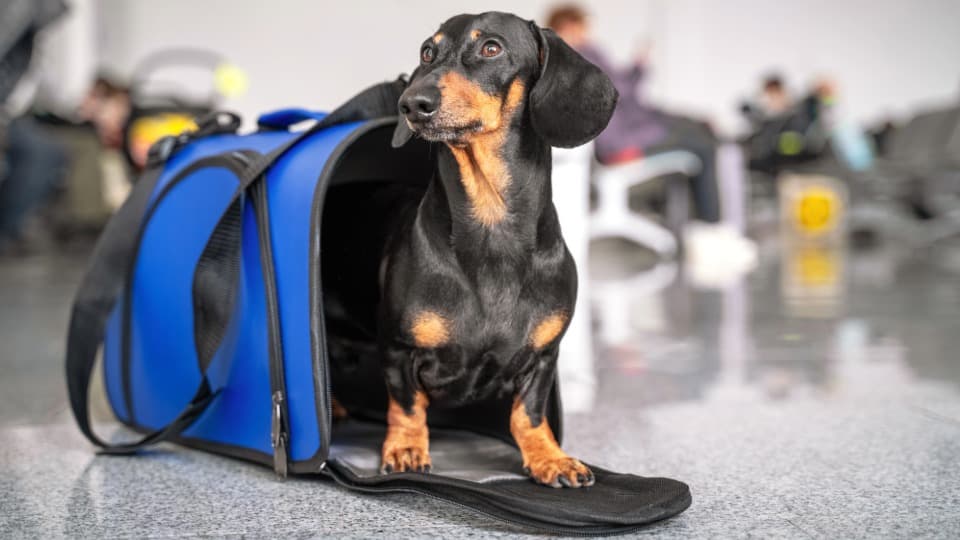
Transport and logistics for your pet relocation to Southeast Asia
A flight to Thailand is long. Choosing the right airline and route is crucial for your pet's well-being.
- In the cabin (PETC): Only very small dogs and cats (usually up to 8 kg including the bag) are allowed in the cabin on some airlines (e.g., Lufthansa, Thai Airways).
- In the cargo hold (AVIH): Larger animals travel in an air-conditioned and pressure-equalized area in IATA-approved transport boxes.
- Manifest Cargo: Some airlines require animals to be declared as air freight only.
Airlines set clear guidelines for box size and stability (IATA-compliant transport box), temperature range/heat restrictions, and number of animals per flight.
Advantages with DACHSER & KOLB:
- Integration of animal transport into the overall relocation concept (household goods, customs, relocation).
- Coordination with animal transport partners (pet relocation, airlines, handling agents).
- Scheduling around import permits, vaccinations, health certificates, and flight dates.
FAQ – What are the most common questions about moving to Thailand with pets?
Does my pet have to go into quarantine in Thailand?+
As a rule, there is no quarantine if all documents (import permit, health certificate, vaccination certificate) are in order and the animal appears healthy upon arrival. However, officials have the right to order up to 30 days of observation if there are any doubts.
Which dog breeds are banned in Thailand?+
The importation of Pitbull Terriers and American Staffordshire Terriers is officially prohibited or extremely strictly regulated. If you own one of these breeds, be sure to check this in advance.
How do I apply for an import permit?+
Send the “R1/1” form together with a copy of your passport, the vaccination certificate, a photo of the animal, and the flight details by email to the relevant quarantine station (e.g., qsap_bkk_import@dld.go.th for Bangkok).
How much does it cost to transport animals to Thailand?+
The costs consist of airline fees (approx. €200–600 depending on size), the costs for the official veterinarian, the transport crate, and the import fee in Thailand (approx. €15).
Is a rabies vaccination sufficient, or do I need further vaccinations?+
No, rabies alone is not sufficient. For dogs, distemper, hepatitis, parvovirus, and leptospirosis are also required, and for cats, panleukopenia. The details can be found in the respective vaccination certificate/health certificate and in the current Thai regulations.
How can DACHSER & KOLB assist me with moving to Thailand with my pet?+
- Advice on entry requirements and documents,
- Synchronization of vaccinations and deadlines with your moving date,
- Coordination with specialized animal transport partners,
- Integration of your animal transport into the overall move (household goods, customs, relocation services),
- Clear timelines and contact persons to ensure that your animal arrives in Thailand safely and with minimal stress.
Why is it worth hiring a professional moving company?
Moving on your own can quickly become a burden—physically, in terms of time, and financially. With an experienced moving company, you not only save time and stress, but also benefit from efficient planning, insured services, trained staff, and customized offers.
Are you planning to move to Thailand with pets?
Would you like to move to Thailand with your pets, but still need a suitable moving company? Then let us calculate your individual price for your move in seconds. We will then contact you and do our best to accommodate all your wishes.

Discover our moving guides—your guide to a smooth move!
You will find valuable tips and answers to your questions in our extensive collection of moving guides. This will ensure that you are well prepared! If anything remains unclear, we are always happy to assist you.

Visa for moving to Thailand
Are you planning to move to Thailand? At DACHSER & KOLB, you can find out everything you need to know about visas and the specifics of your residence status.

Thailand
Important information about your stay in Thailand. You can find out everything about politics, climate, healthcare and the economy here.

Take note of customs formalities for Thailand
Guidelines, formalities, prohibitions—all important information about moving to Thailand and the most important customs formalities and tips from DACHSER & KOLB.